November 26th, 2009
admin
This article just appeared on cnn.com.
With all our talk about human trafficking in this part of the world and what Opportunity Foundation is doing about it, let’s not forget it is really everywhere. In the U.S. we have had laws against it longer, but there is also more money available to earn by breaking those laws. The traffickers are bad guys, all right, but what about steady supply of customers wanting to use young kids, or maybe just “not noticing” that the girl they are having sex with is might be younger than they thought? If the customers were not there, the traffickers would not be either.
It could be a lot closer than you think. What if you find someone you know is using children like this? Can you really stand by, do nothing and let a child continue to be enslaved? If you see or hear of anything along these lines, please get in touch with authorities.
November 26th, 2009
admin
A city in India has an earthquake and 50,000 people die. Why is that?
Almost two weeks ago I noticed a new building starting just around the corner from me in Nang Rong. I know, I say everything is just around the corner. It usually is. I live close to city center, such as it is. My house is on the same street just beyond the houses your see rising in the background in these pictures.
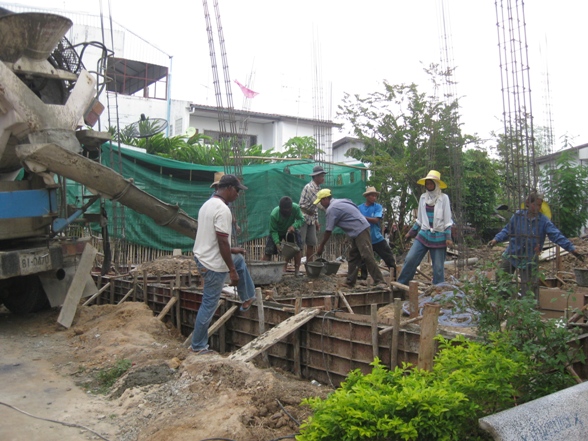
The rebar runs up pretty high, so I’m guessing it will be a two story building like those around it. I want to see how it goes up, but from the start it appears to have a problem. In the first picture there is no rebar placed between any of the narrow columns, and no concrete poured between them in the second picture. Such walls, if present, would be called shear walls. They may be engineered or not, have enough rebar or not, but they would still be shear walls.
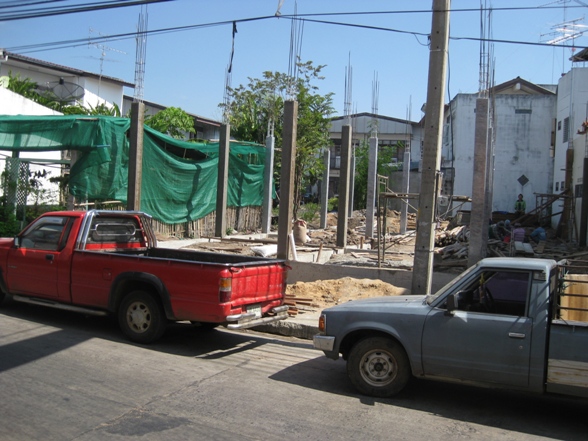
Shear walls prevent the columns simply bending over due to a side thrust from an earthquake. When this happens the concrete floors and roofs above “pan cake” down on whoever is below. It can get really bad if it is a school and in session. That happened not long ago in China.
You can read about shear wall basics here.
I see buildings built like this all the time in India. Only in one case of an under construction building (large Catholic home for street boys – Yay!) do I remember seeing steps taken to prevent pan caking. I talked to an Indian geologist about this and his answer was “We don’t have earthquakes in this city.” This was after he told me about an earthquake that killed 30,000 people years before about 800 miles south of where we were.
Earthquakes can happen anywhere, although they may be less likely in some places, such as Nang Rong. If one does happen what then? If this current building were built correctly, it could hold itself up in an earthquake, and maybe also help stabilize buildings around it.
You may have heard about how expensive it is to fix an existing building for earthquake resistance, but shear walls are very cheap to put into a new building. The builders of this Nang Rong building are going to fill some of the spaces between the pillars with brick anyway. To fill a few of these places with concrete and a bit of rebar instead would cost very little more.
This is important! Even if built badly, without an engineer, buildings with shear walls don’t fall down. They may crack or be damaged in an earthquake, especially if engineered badly or not at all, but they just don’t fall down. The people in them survive.
In any of the buildings we build in Opportunity Village, if there is concrete over your head, there will be shear walls, guaranteed. We’ll even go one step further and properly engineer them!
November 21st, 2009
admin
I just got back from Bangkok last night. I had heard it had cooled off here while I was gone. I have not used the air conditioning in my house yet, and had to have my blanket, which is more like a big beach towel, last night. This morning was the first time I really felt it. I got up at about six thirty and went running out to the foundation property. The sun was out, as it is nearly all days this season, but still very low. Just enough bite in the air to really energize.
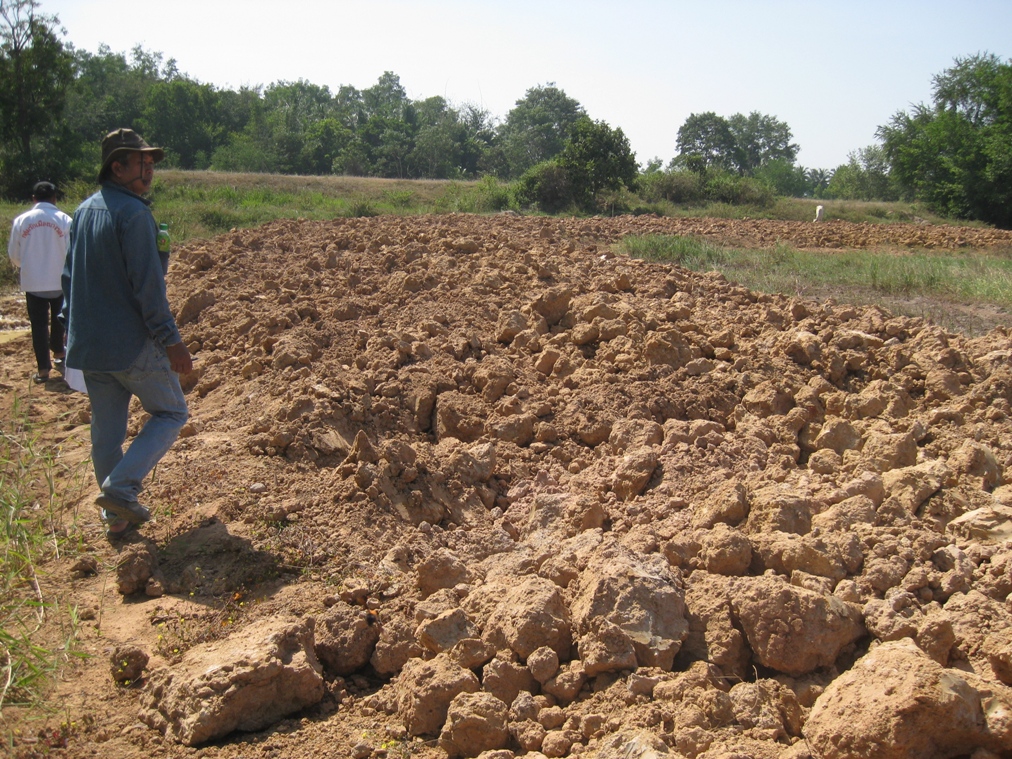
I was going to run the ring road at the foundation, which is almost exactly one km around before running back. After getting a third of the way I had to stop. Our contractor for the property fill and road building had to quit a few months ago for the rainy season, but he must have restarted while I was gone. There was new loose fill on at least a third of the ring in the back. I guess he’ll roll it out later. He fills and compacts the road in 20 cm layers, but the compaction is sufficient that when loose it’s about half a meter of big dirt clods.
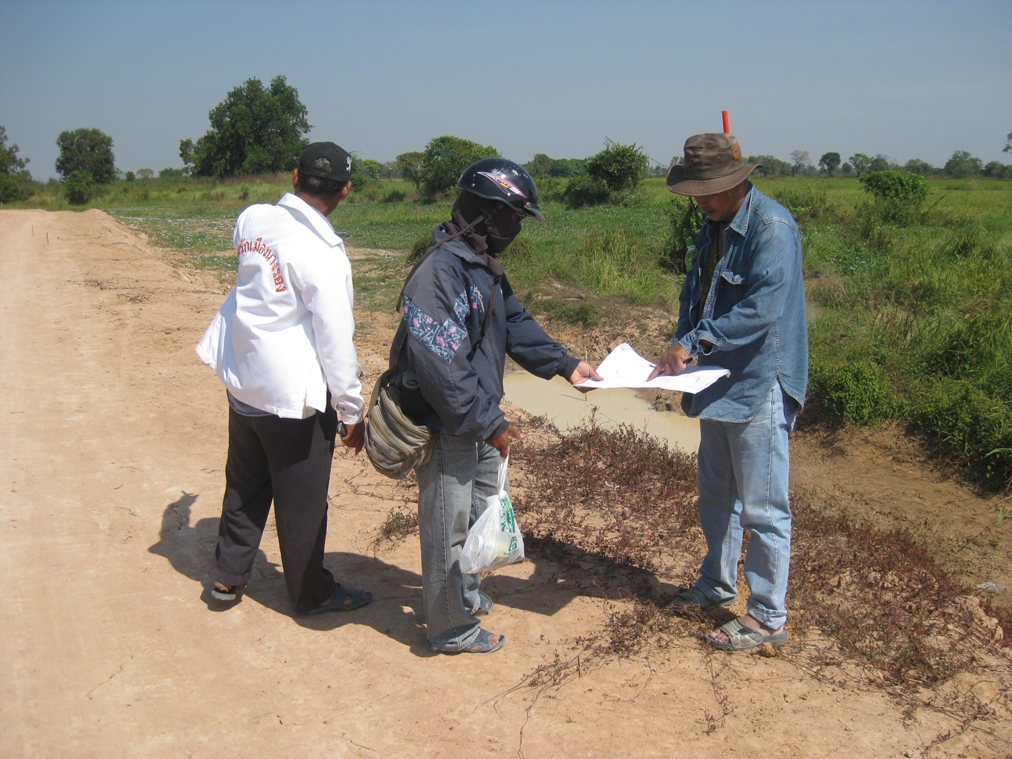
The road engineer/surveyor came out to the property at noon and asked me to come out again. This time I had my camera with me. It seems a property line marker had been mistakenly set in the wrong place and had caused the road to be placed wrong in turn. Also in another place the road was too close to the small canal. Not really a problem at this stage. The main thing I watch for is that no mistakes are made that might squeeze our child home locations between the road outer edge and our property line. It won’t do for our children to walk out the back door into one of the canals.
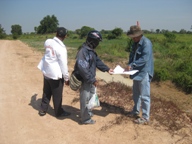
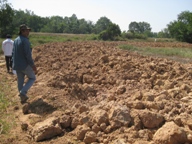
The left picture is taken by the small canal, which is to the right behind a grassy rise. Rot is on the left and Khun Winai our engineer/surveyor on the right. Ho, the father of our first family, is in the middle. He has a jacket and mask on for motorcycle riding. I do find a jacket helps if I’m riding a long way in cool season. I’m not in the picture but had no need of a jacket. I think Thais can have a little different perception of the weather than someone from the U.S. might.
It was early afternoon and the weather was still great. It was just right for walking the entire area that I had avoided this morning. Anyway, we checked everything and we will get it all into the correct position.
It’s an ideal time to be here. There are days in Nang Rong when the clouds come and are really welcome. This is the “dry” season when the sun is really welcome, and fortunately out nearly all the time. “Dry” may convey the wrong image. With rivers and canals everywhere this is certainly no desert. There is plenty of water for everyone and everything. “Cool Season” is another term that is maybe less used by Thais but better describes it for my way of thinking. It’s still short sleeve weather except maybe in the early morning, if you’re not running.
November 20th, 2009
admin
I just returned to Nang Rong yesterday from Bangkok where for a week I was in a number of meetings. Anita is here in Thailand and set up meetings with foundation staff for future social work issues, budgeting and government regulation compliance.
I spoke of Anita in a previous post (29 July 09), so you may be wondering how she is doing. After a week of meetings, some of them pushing eight hours, I’d have to say she is much better. At least her endurance in long meetings exceeds mine. There was a lot to talk about as we projected our plans and budgeting out through the next year.
Pon, our acting director, came in for a day of budget and management discussions. Included in this was planning for the first child home, whose construction we hope to start very soon. There are also various details related to the first few houses, such as a water supply, running electricity in, etc.
The longest meeting was with Walai, our new director of social work. Walai came to us just a few months ago after getting her master’s in social work from Baylor University in Texas. Not that she is a green recruit just out of school. In her previous life she worked nearly fifteen years with several NGO’s in Thailand, including working with relief projects after the tsunami hit two years ago. She is still involved in a bit of that work.
There was a lot to go over both in the issues with our current girls, new ones to come and how our families should run. A lot of this was interesting stuff. I’ve been after Walai to get some of this information into the blog and website, since her English is very good. Hopefully she will be able to squeeze in some time soon.
Why did we have these foundation staff meetings in Bangkok instead of Nang Rong? Anita had other business to attend to there, but the main reason was the additional meetings we had with other organizations. These days you cannot just come to Thailand, say you’re a nice person with a big heart, and start taking care of children. There have been a few problems in the past with some that did this, in rare cases even abuse has occurred. In the last few years the Thai government has revamped the laws and qualifications for working with children in ways that are similar to the laws in the U.S. Progress has been fast, which is good, but which also can lead to a little confusion at times as to just what exactly are the requirements in a particular area. The people and organizations that know the most about these things are in Bangkok.
November 14th, 2009
admin

With Sue in India doing teacher training and me in Nang Rong, I have to think about finding food more often than I would otherwise. I have already written about one Isaan basic food group, Som Tam. Today I walked down to Nong Biea for lunch. It is named after the owner’s young son and located by a red teardrop on our map.
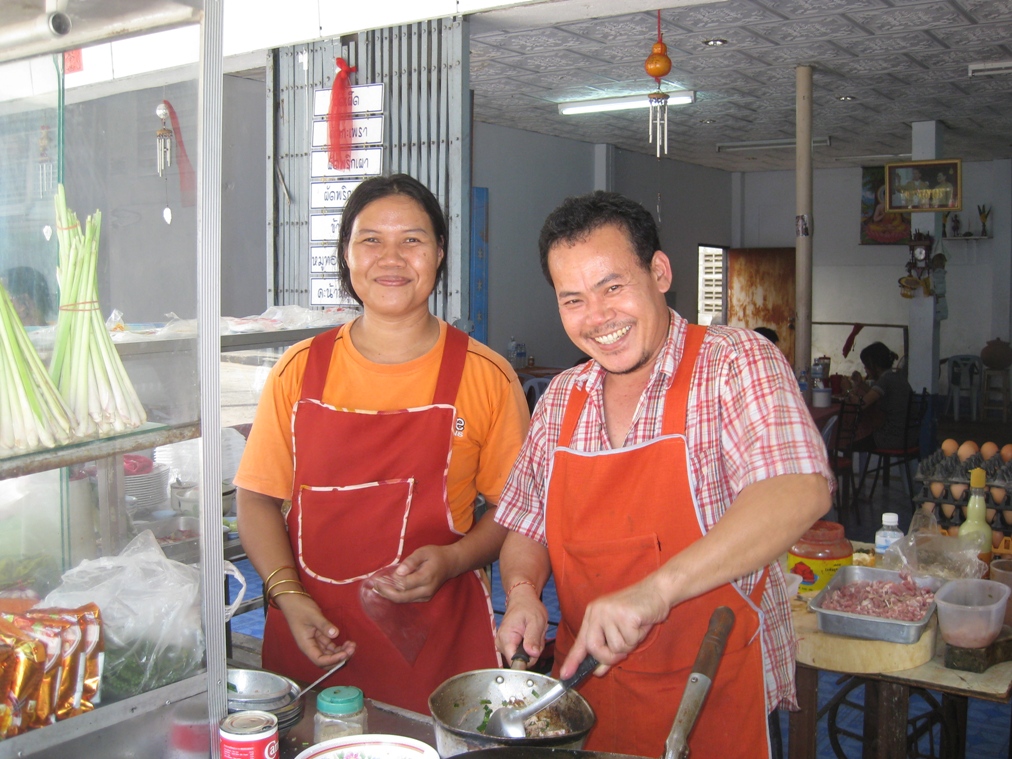
It is run by a good friend, shown here with his wife who works alongside him. Previously it was a one minute walk from my house but he closed that to help care for his son who was in a bad accident more than a year ago. He has since reopened in a new location. It now takes five minutes. In the above picture it appears dark back in there. It’s not dark, it’s just out of the sun. The front is open to the outside, just like nearly every other restaurant and store in Nang Rong. He cooks out front, to the right in the picture.
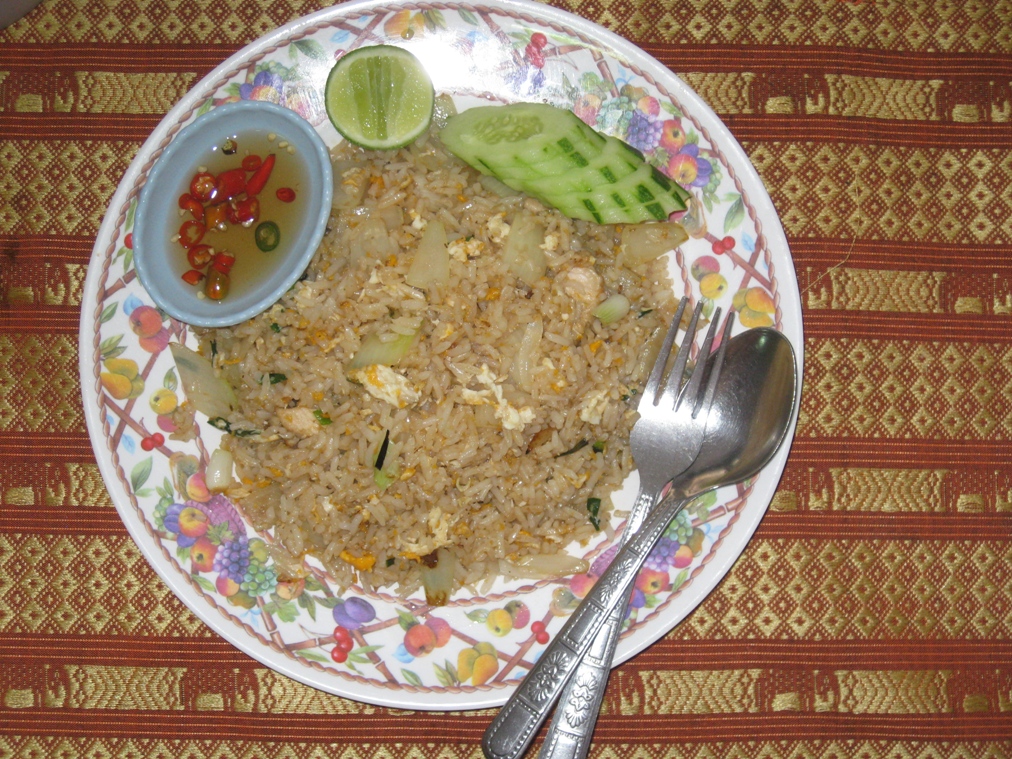
I had the old stand by, kao pat gai, or chicken fried rice. I have him put in onions too. I can get something like it in the states and I’ve had it at different places in Bangkok, but I like it better here. If a new farang knows the Thai name of only one dish, this is probably it.
“Pat” means stir fried. Except for steamed rice, most hot things served in a restaurant, the meat and the veggies, have just been stir fried. The first time I see a microwave oven in a restaurant in Nang Rong, I’ll let you know.
Many of the restaurants in Nang Rong offer fried rice, but Nong Biea’s looks and tastes lighter. When Nong Biea was closed, I got kao pat gai at other restaurants. What made me stop eating it was getting a take out bag and putting it in the refrigerator for the next day. I took it out and looked through the transparent bag and thought “I’ve been eating this?” and hoped I had not been forgetting my cholesterol pills. It was easy to see the solidified white grease here and there. I heated it up in the microwave just to try it. It did not taste as good as the day before. I only ate the first bite.
After having sworn off, I tried it again a few weeks ago when working at the foundation office. We all ordered kao pat gai from Nong Biea to be brought in for lunch. It looked and tasted a bit lighter than I remembered, so a few days ago I did the “test” again. I got both a take out and an eat in order of kao pat gai. It was very good at the restaurant, and when I took it out of the refrigerator the next day it still looked good, without any more clumping up than already cooked rice is going to do. After microwaving it tasted pretty much the same as the day before.
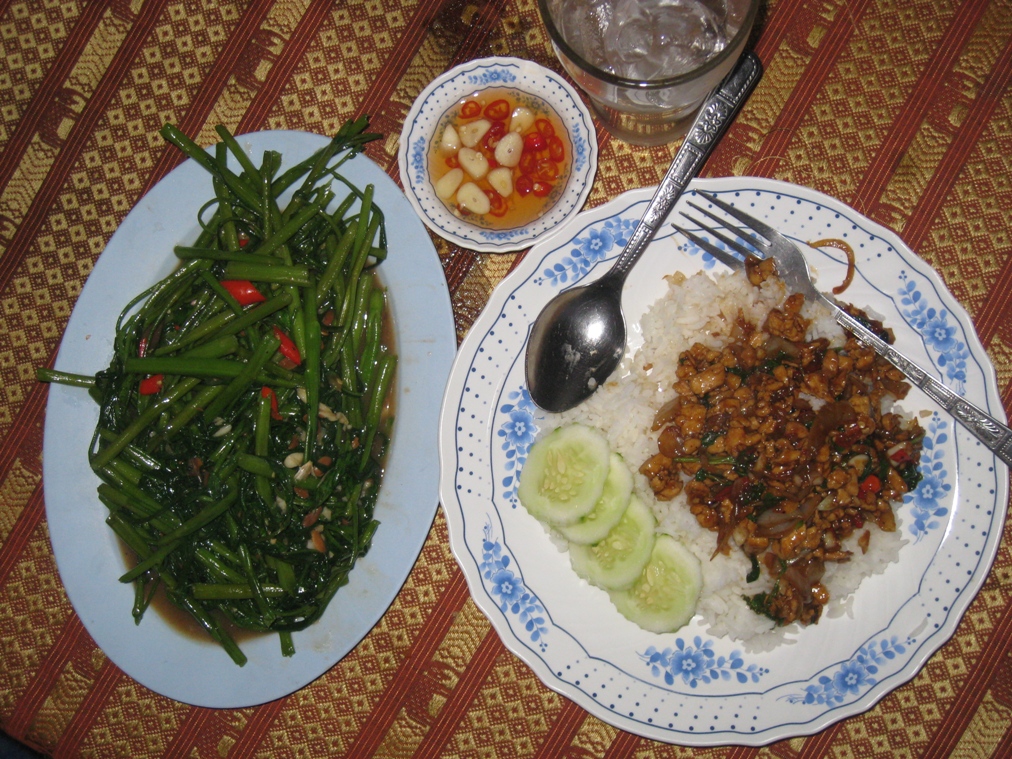
Kao pat gai is normally not spicy at all. You can add the red peppers shown in the small dish if you wish. I usually do. At Nong Biea I also like gapow gai, a spicier dish with chicken and steamed rice in the rightmost picture. Pak boong, the green vegetable shown with it, is a very common vegetable and is maybe the Thai substitute for spinach.
Thailand is just starting to think about heart health. Many of the city hospitals are opening up heart centers and doctors here know more about heart disease than a few years ago. I suppose in a few years they will start thinking more about what they are eating (they still consume tons of MSG also). In the meantime, I would have already recommended Nong Biea for those of its selections I had previously tried, but now I can also say that they use vegetable oil for their stir frying, not the left over hog fat.
November 14th, 2009
admin
Mr. Dinger did sent a picture of the U.S. Embassy in Myanmar. As I said before (08 Nov 09) the Embassy is quite impressive, and indicates that although the U.S. has a lot of differences with the government there, it is certainly taking Myanmar seriously. As I remember, there was more in the compound on the other side, past the right edge of the picture, but am not sure. I would guess there are a number of countries that have an ambassador named as such that do not have an Embassy like this one.
As I see it, the U.S. wants a representative democracy to develop in Myanmar, and may wish to withhold some things until it does. Myanmar is hurting in many ways right now. There are countries, such as Singapore, Vietnam and even China that are not democracies by still have a good economy and are busy developing a better life for their people, albeit with some restricted freedoms. Maybe not the best situations, but better than some others I can think of.
When people are hurting badly enough, I suppose I am willing to compromise and not ask for the best. Second best might be worth looking into. Of course, this is not a request to Mr. Dinger. He is sworn to uphold U.S. policy. It’s the president, congress and maybe secretary of state that need to do better by the people of Myanmar, even if its government is not what they would like.
November 12th, 2009
admin
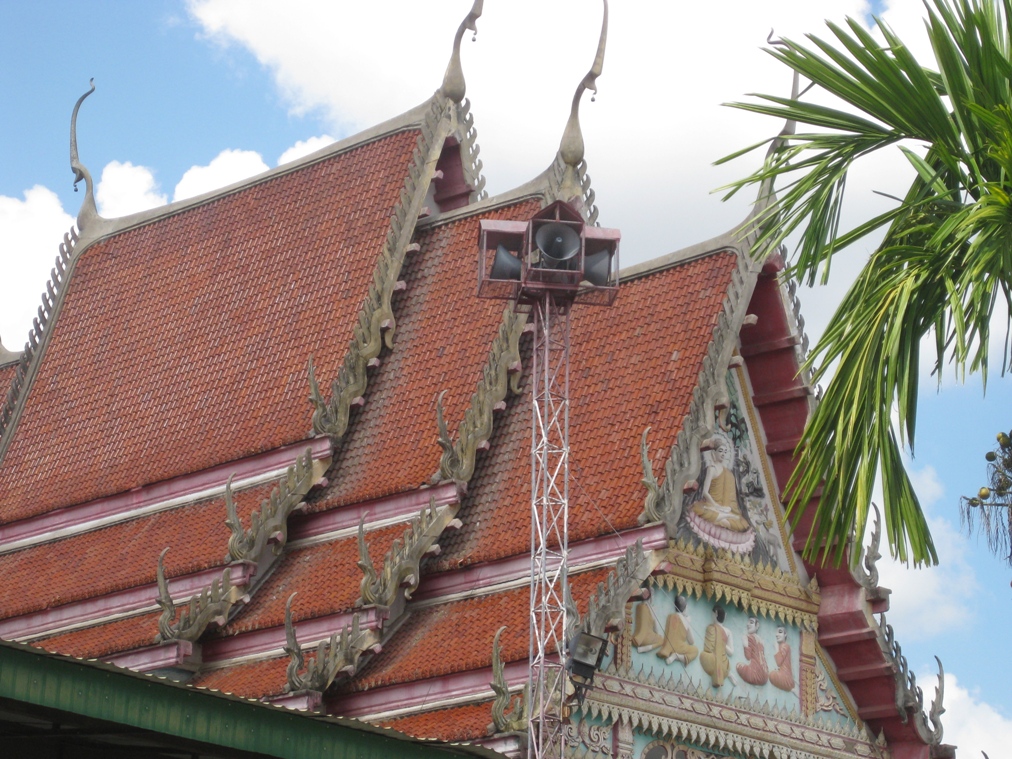
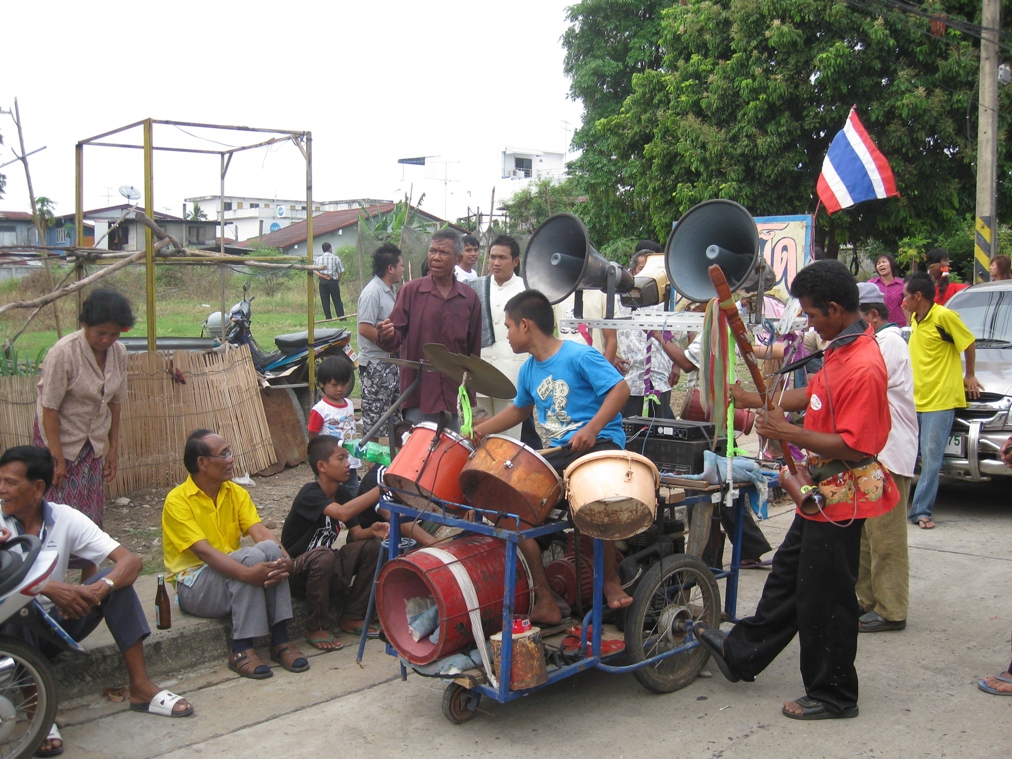
I have never noticed anywhere in this part of the world that has a noise ordinance. In Nang Rong many wats have big outdoor speakers and play music, sometimes western music, in the evening. This normally does not last very late, but may if there is a special festival. The Red Cross of Thailand and others hold the equivalent of a county fair at the field in front of the Nang Rong School. In fact there is one still going on right now, connected with the festival I just described in a previous post. Here again there are plenty of booths with sound systems. It can get pretty difficult to use your cell phone outside.
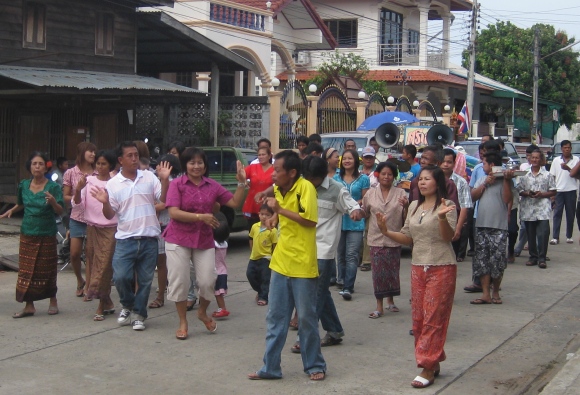
Weddings (seen above), ordinations (nearly every boy in Thailand is ordained as a monk for at least a week or two), and other occasions have a speaker system or two somewhere, with the Thais out in the streets dancing to it. I attended the celebration for the new Nang Rong nigh amphoe (equivalent of our county commissioner) and did he use the P.A. system for a speech? Not that I remember, but he did sing. He was good, but I’ve heard that the previous holder of that office was really great. The previous governor has a good singing voice as well.
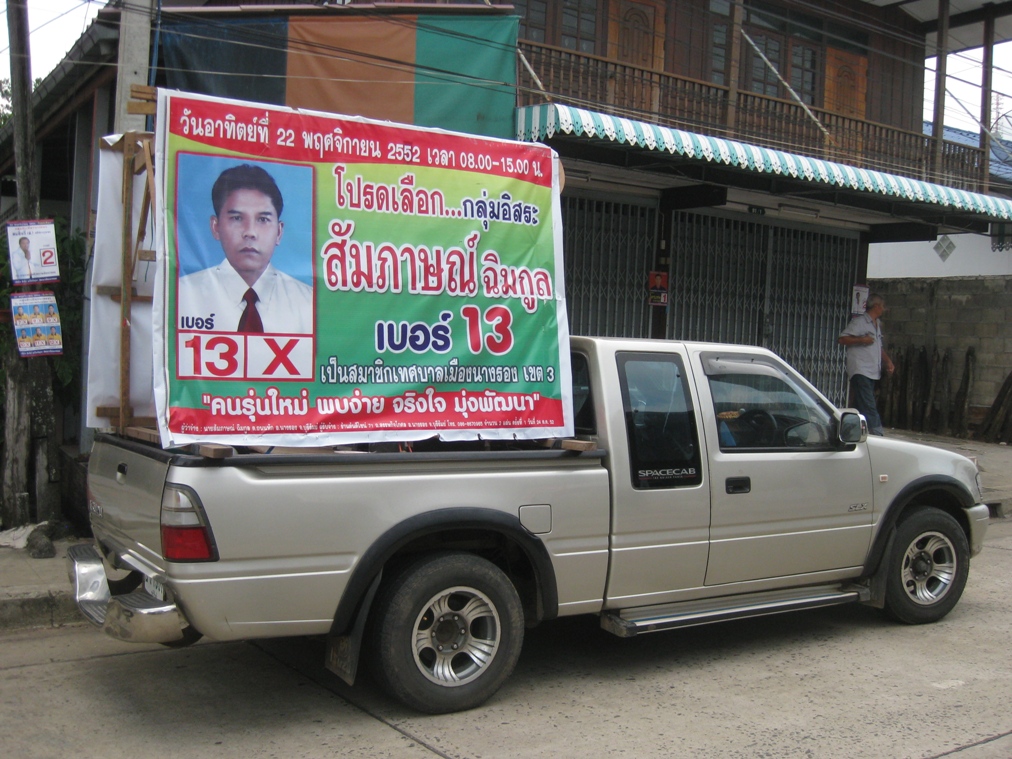
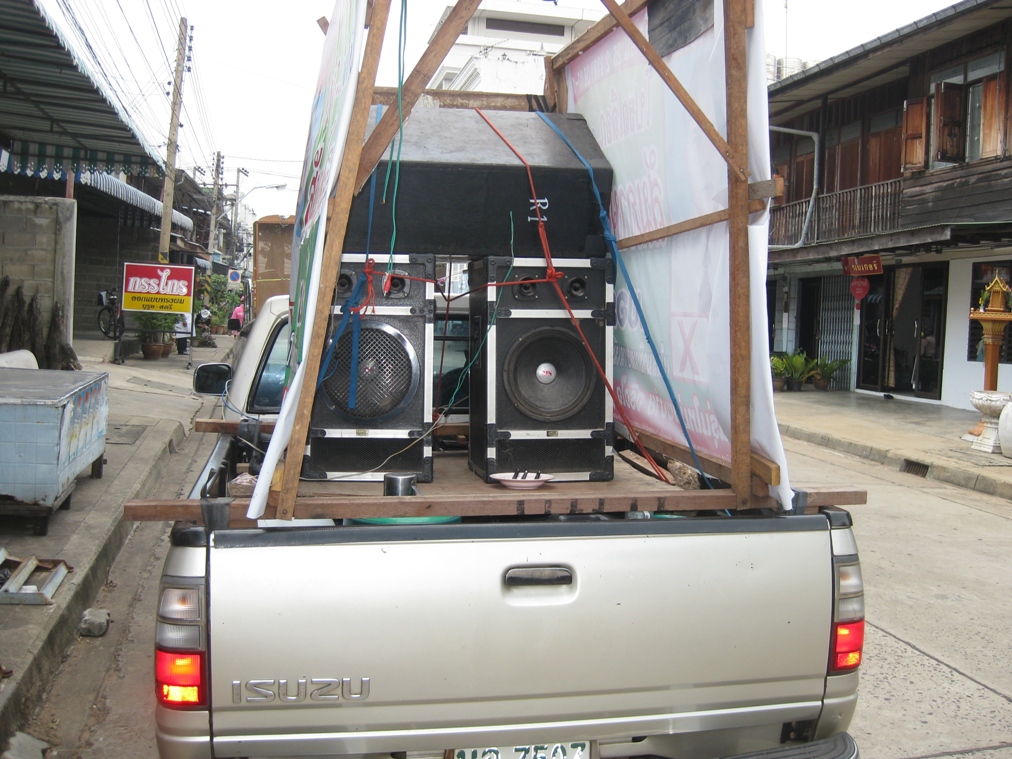
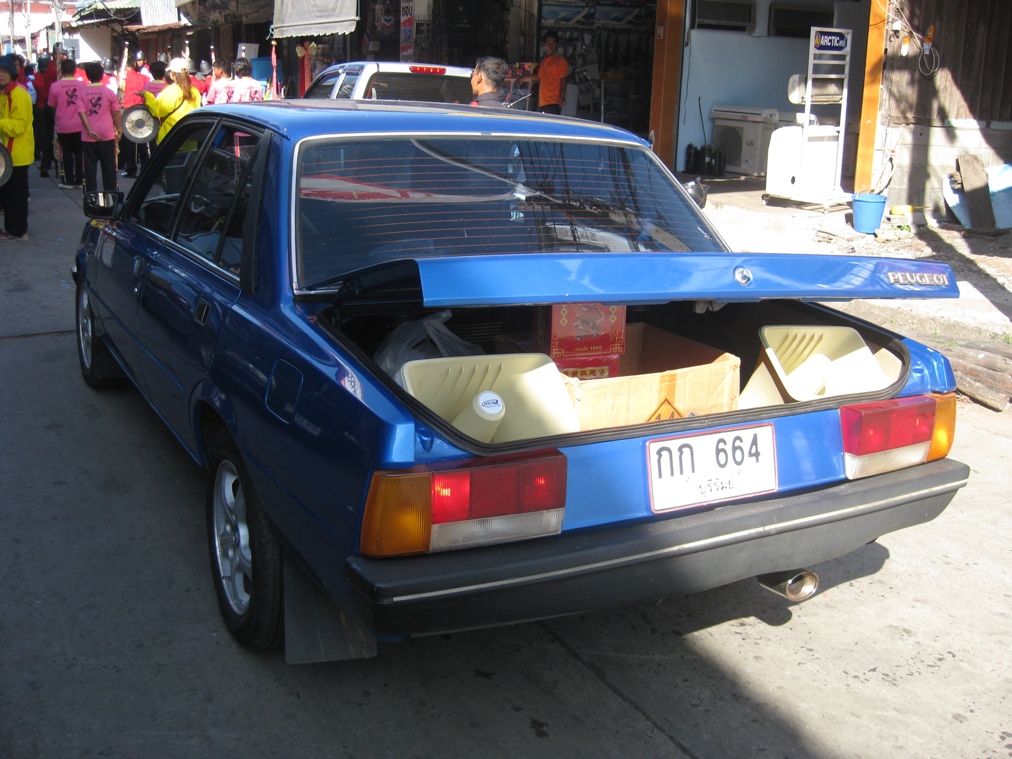
Right now several people, including our contractor for our foundation land fill, are running for mayor. For this you see billboard trucks with big speakers all around town. For other things there are cars with speakers tucked in the trunk (as seen in the day before yesterday’s parade), motorcycle speaker platforms, you name it.
I asked various local people what they think about all this sound and the consensus is: They like it. Thai people like to have fun, and music and other sounds are part of that.
From my American point of view, I don’t think it is carried too far. It is fun, and the atmosphere is perhaps an upgrade from a typical, somewhat dull, American small town. More like our movies (the happy ones) show American small towns forty to sixty years ago.
There is still a lot of quiet time, unlike Bangkok, where, except for your hotel room, it is continually noisy with traffic outside and music/advertisements inside. I started trying to learn Thai in Bangkok and found it impossible, since it was always too noisy for me to hear anyone well enough to distinguish unfamiliar language sounds.
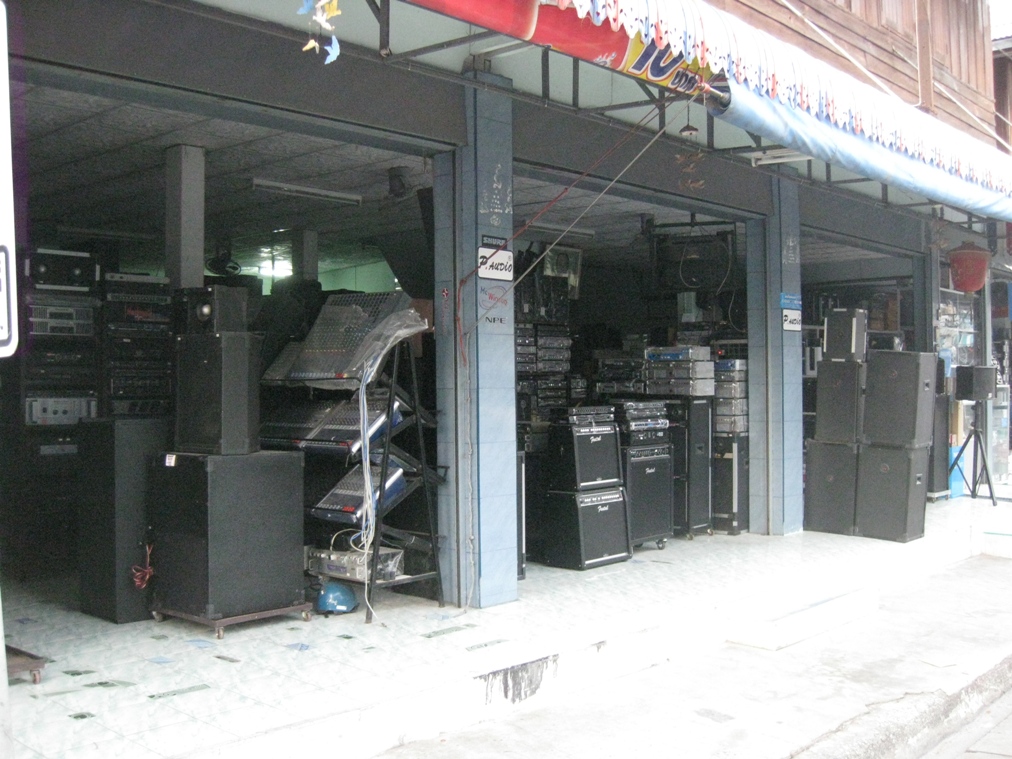
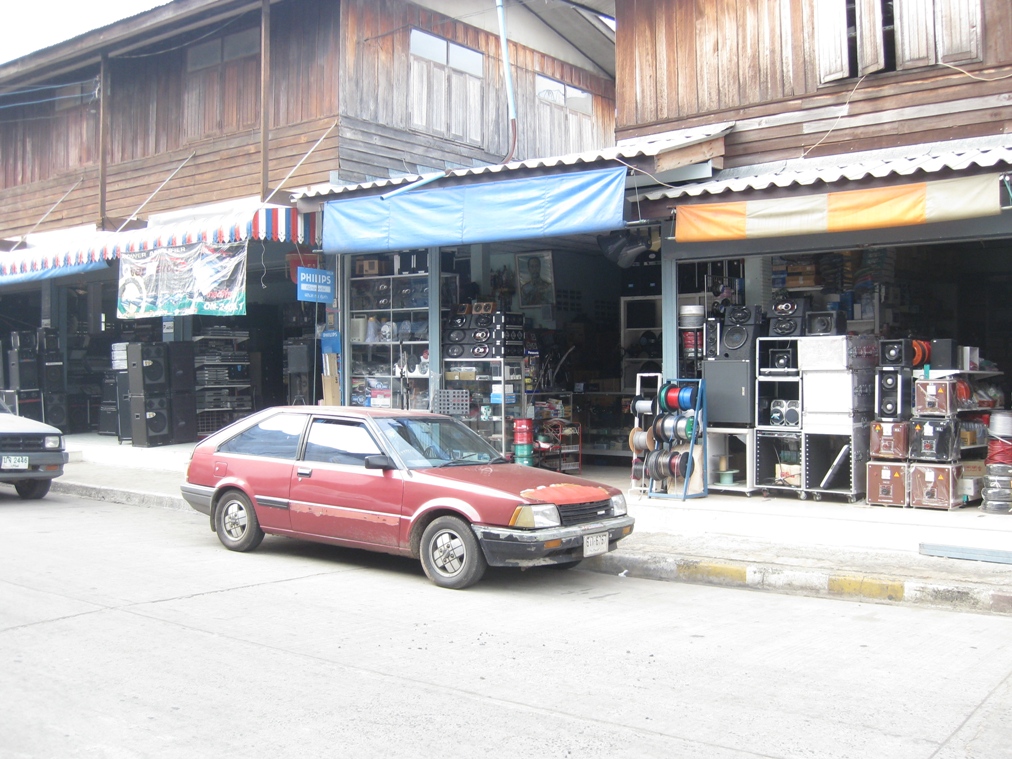
Where do all these speakers and sound systems come from? Less that a two minute walk from my house is the largest speaker store I have seen just about anywhere. I couldn’t get the whole store front into the picture, it’s too long. He sells just about everything related to P.A. systems and professional sound. What I did not find there were home theater/hi fi type systems. There are a few, considerably smaller stores that sell smaller home systems here, but they don’t amount to much. I thought this had to be the largest store if its type in the area, but no, the owner said there is a larger one sixty kilometers away in Buriram city.
How are Thais different from Americans? Well, if we follow the money, Thais appear to spend much more for public sound than for anything they put in their homes. I think we Americans are the other way with our big home theater surround sound systems. Who enjoys it more? Thais dance in the streets. Can we match that?
November 11th, 2009
admin
I took over 1200 pictures this last time and so am showing only very few here. Sue, Hector and I had a cloud/sunset photo contest on the way back from the river village. The sky was spectacular with Monumental cloud formations. The camera just cannot show what it is like to be there.
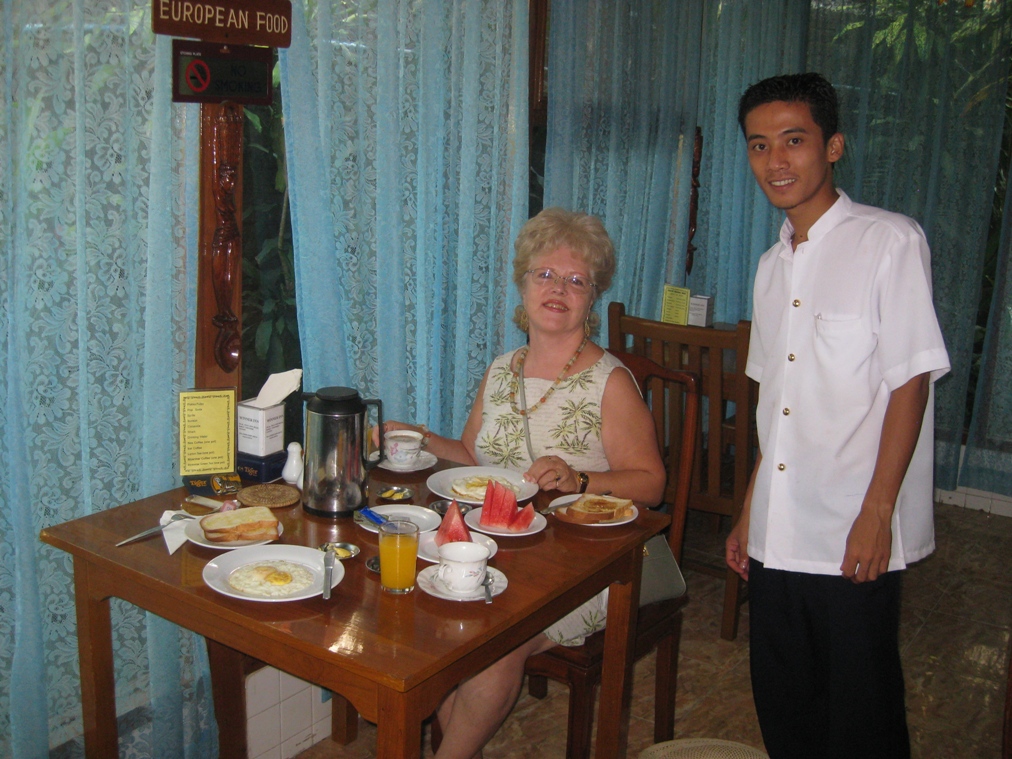
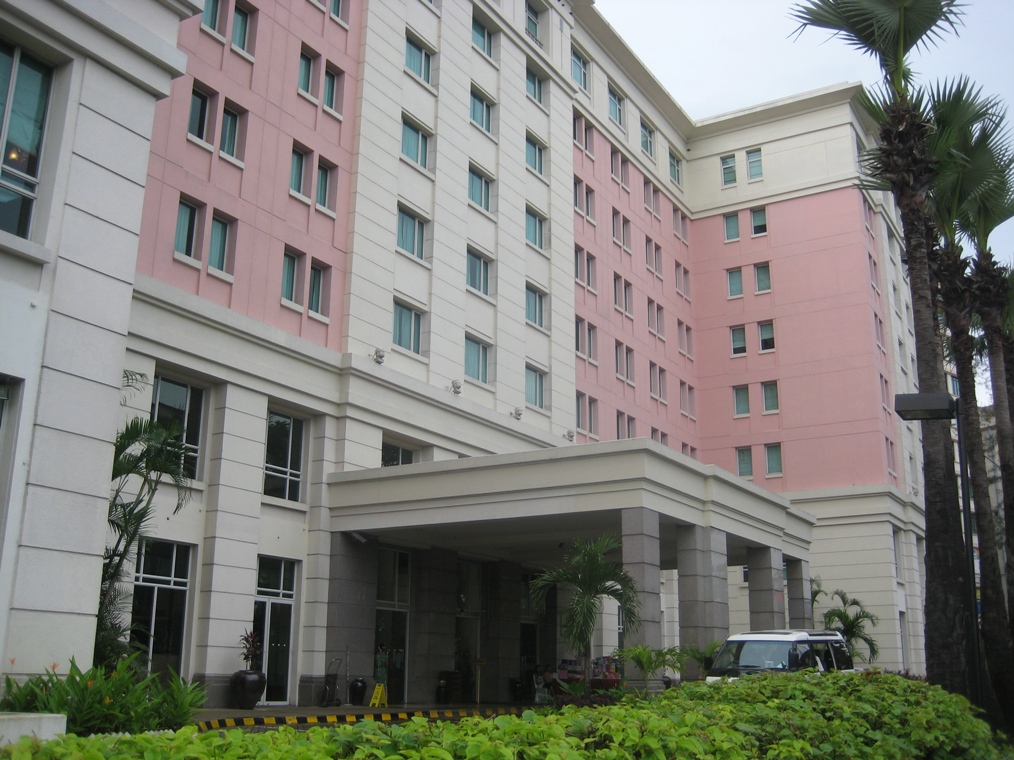
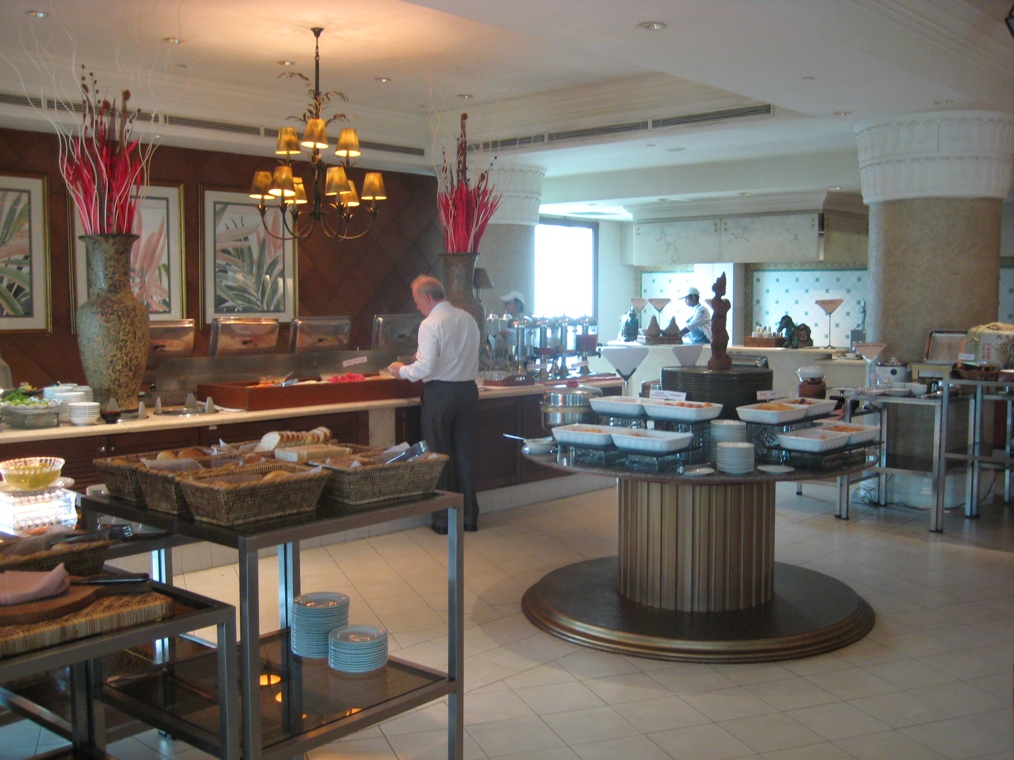
I do have a few hotel/restaurant pictures to show. We stayed at the Winner Inn this time. It was fine: a clean large room with air and hot shower. The staff was friendly and we found we could order, get served and finish an American style breakfast within fifteen minutes if necessary. Normally if I am staying in Yangon I like the Park Royal, shown in the second and third pictures. It is even more downtown than the Winner, large and reasonably luxurious for $55 per night at the moment. I would compare it to hotels in Bangkok in the 150 to 200 dollar range. Meals at its buffet were always good, even for someone as picky as me. I stayed there for a week on my previous visit.
Thant took us to a number of really nice restaurants. Again, in Myanmar you will find prices sharply lower than Bangkok or other Asian cities, but the quality and variety of these Yangon restaurants could not be beat.
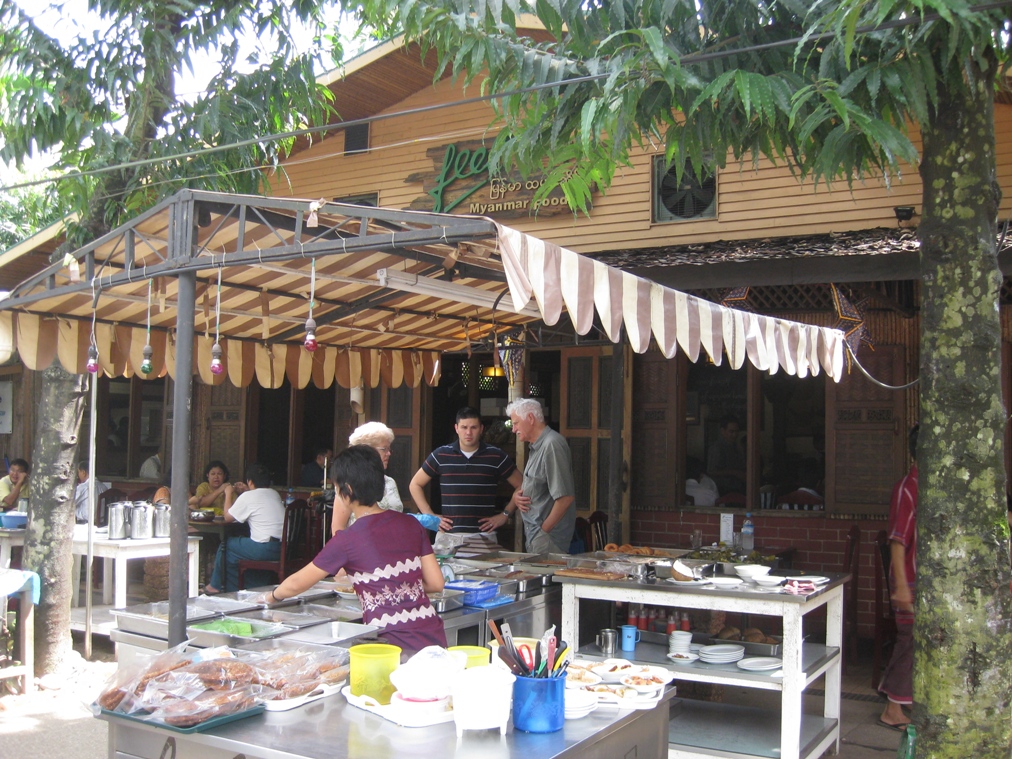
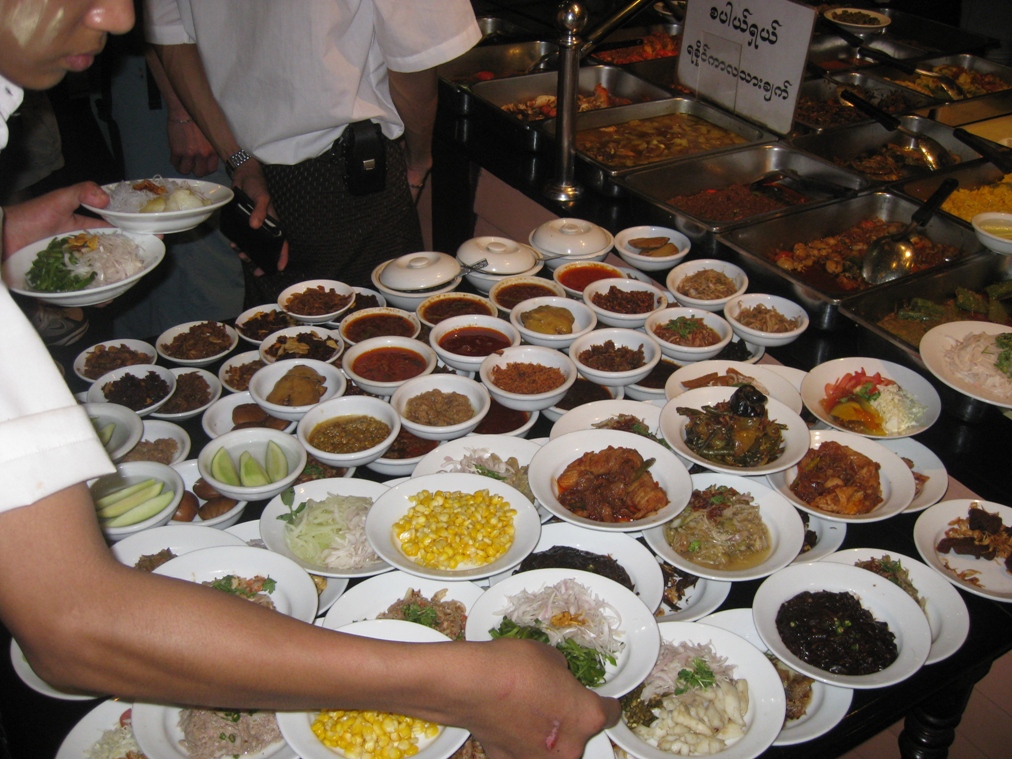
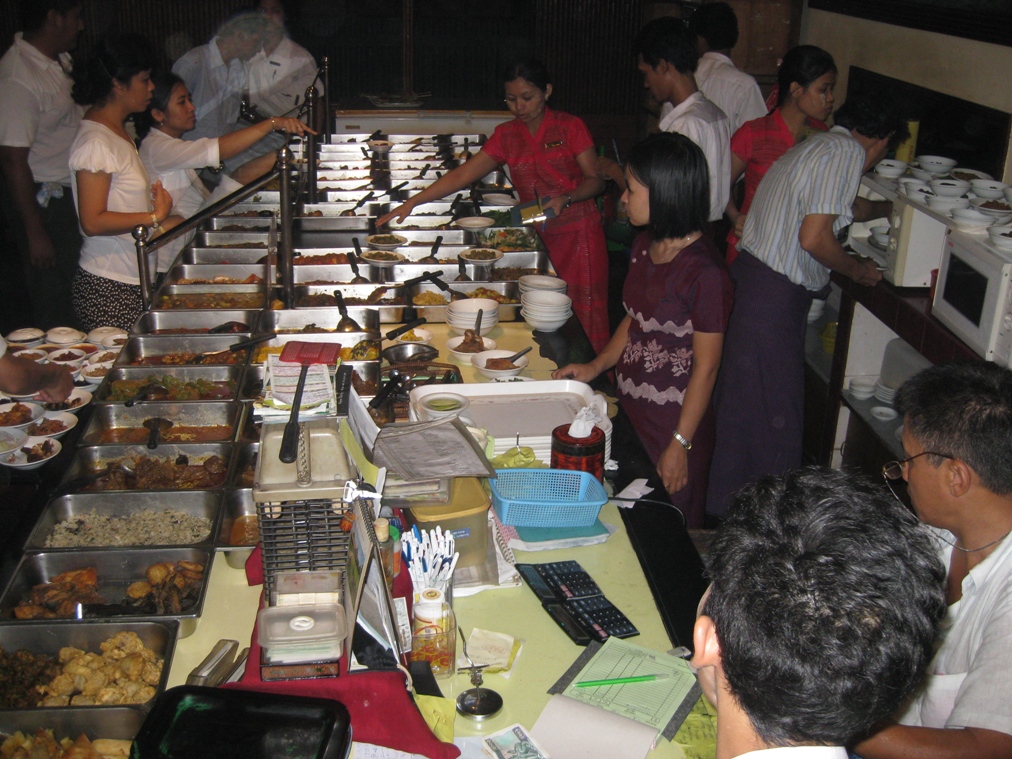
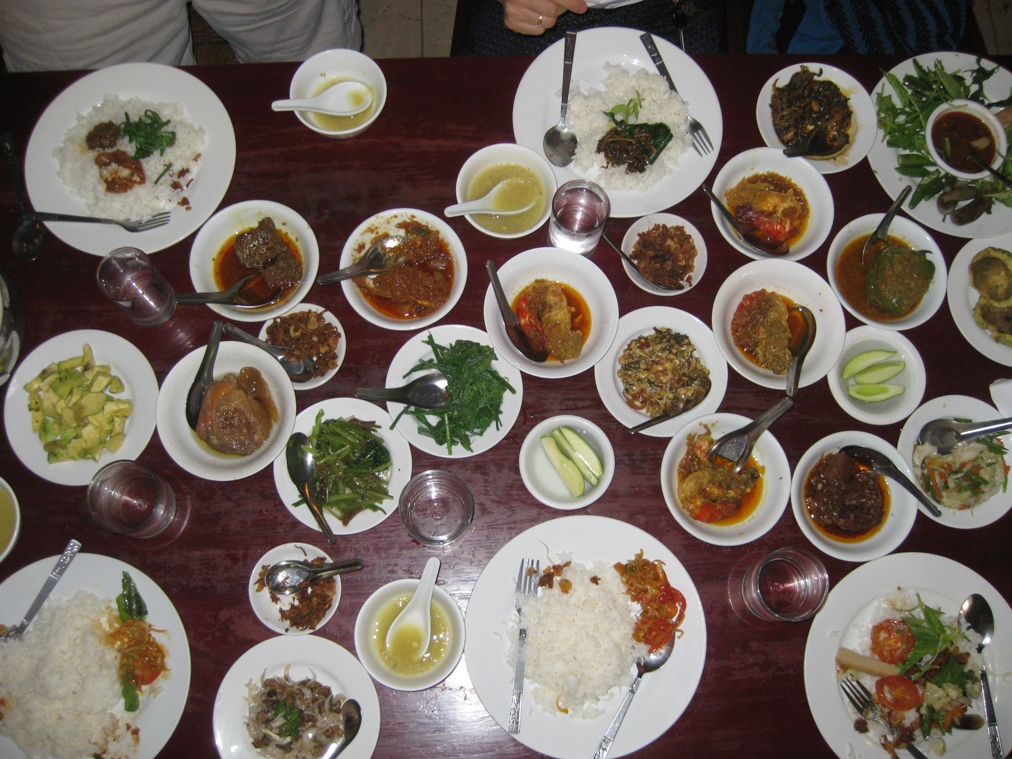
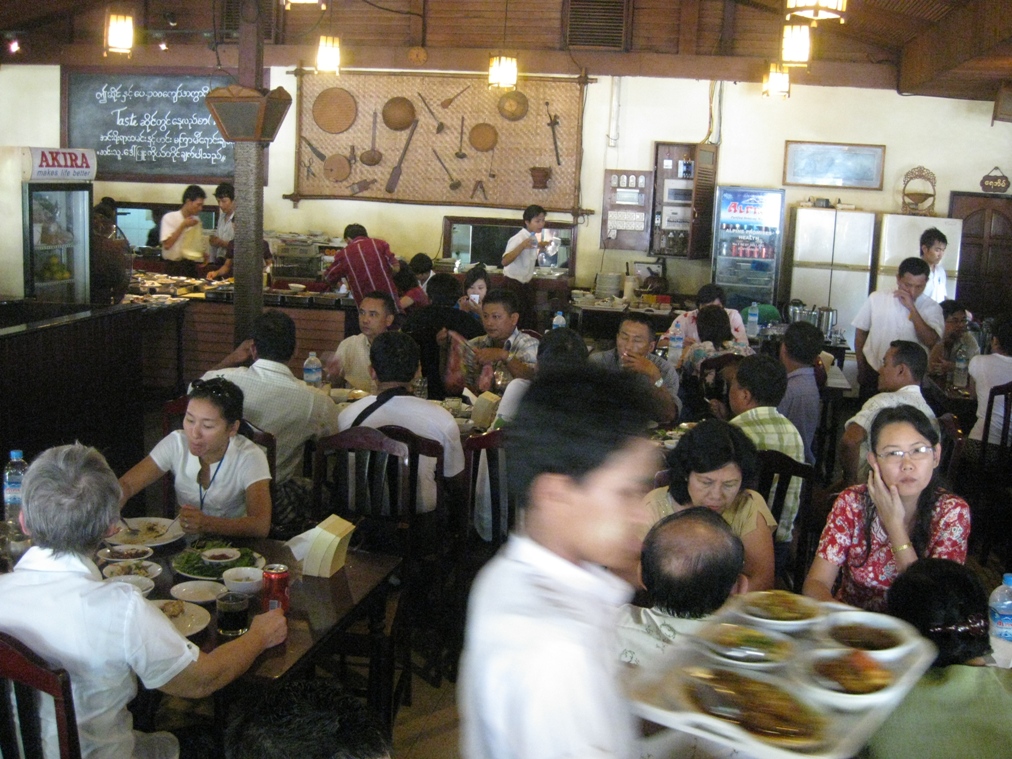
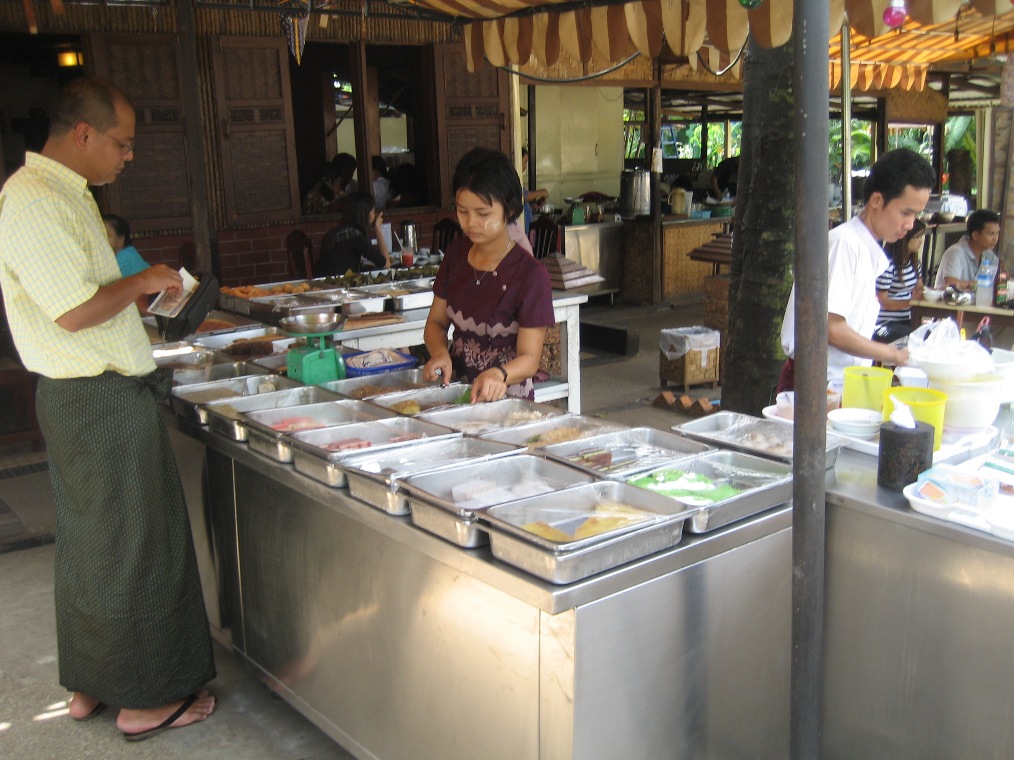
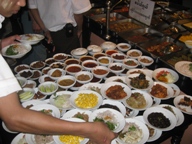
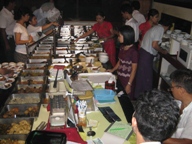
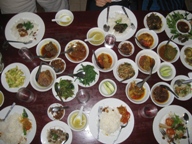
We ate lunch at the Feel restaurant our first day back from Bogalay. Everything was good, with a very wide selection as you can see. You pick several vegtable/salad/side dishes and hand them to the staff. You also can pick from the various food trays at the main counter. The first picture in the second row shows what our table looked like when we started. We tried all kinds of Myanmar food here, all very good. Later, we picked Myanmar style deserts from the trays outside in front.
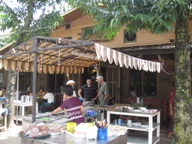
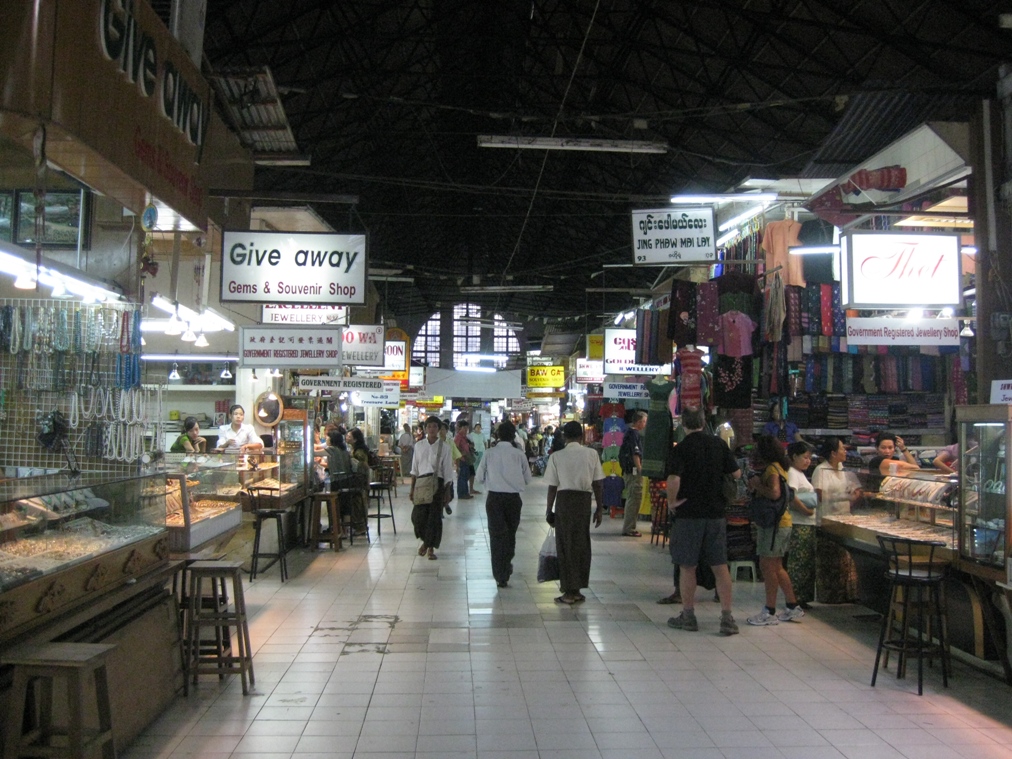
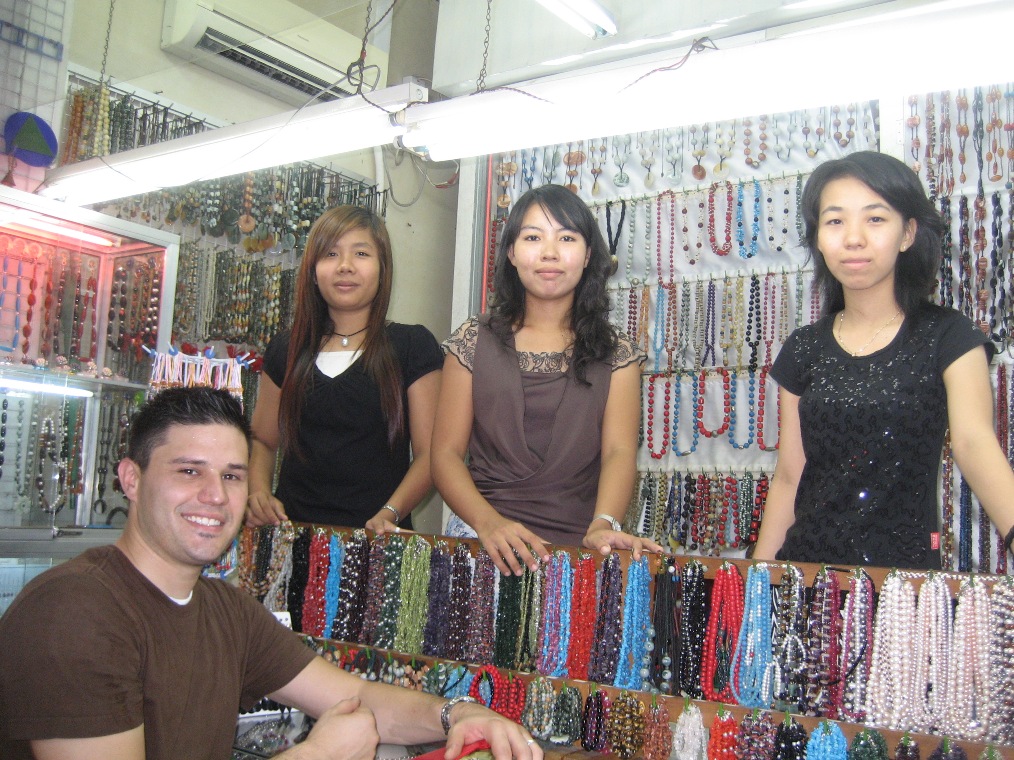
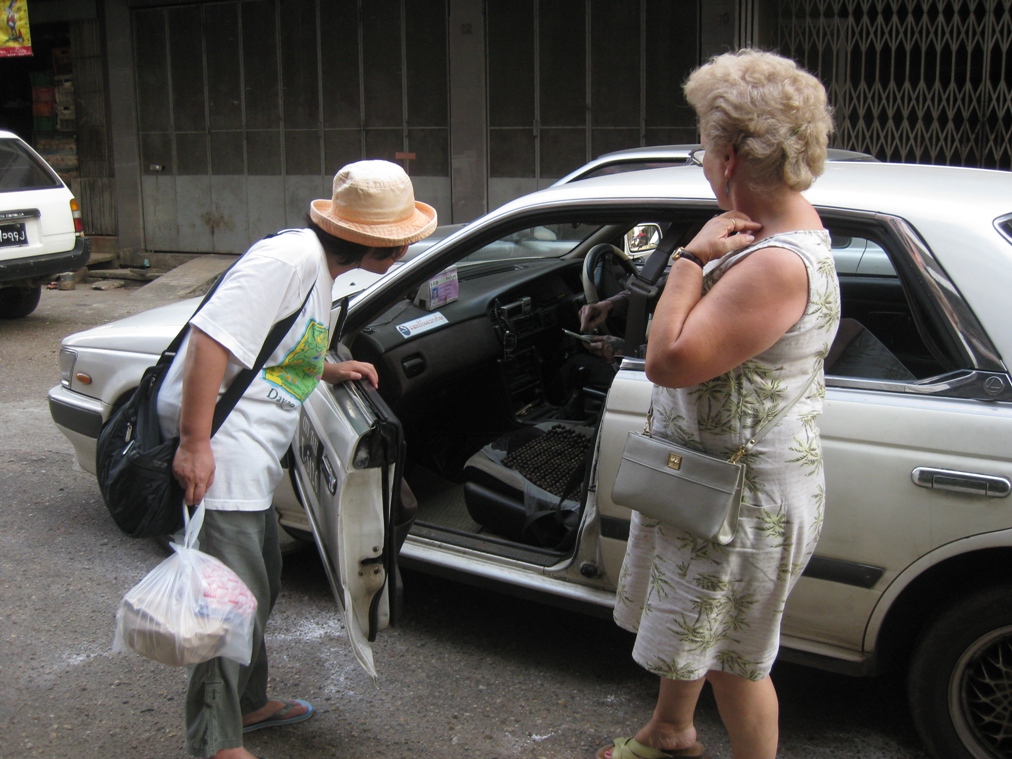
There had to be a shopping expedition to the Bogyoke Aung San market, a five to ten minute walk from the Park Royal. It has over 1600 shops. Hector got some jewelry for his wife in the second picture. The driver’s seatback was held up by wire wound between the headrest stem and the upper seatbelt stay in the cab we took to the market. Note the end of the door in the cab Sue and I took to a laquerware shop later - no latch. I discovered this as I was riding in the front seat. Nearly all cars, cabs or private, are quite old (see video) in Myanmar. On the balance, I still think its safer to be in a car in Myanmar than in Thailand. Nearly all the cars were built before air bags had been invented, but driving is slower and traffic is much less.
November 10th, 2009
admin
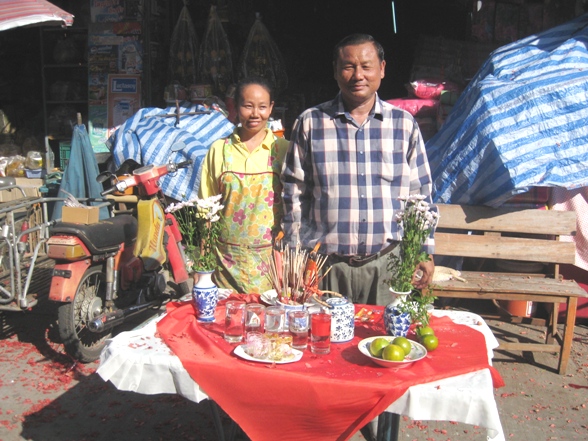
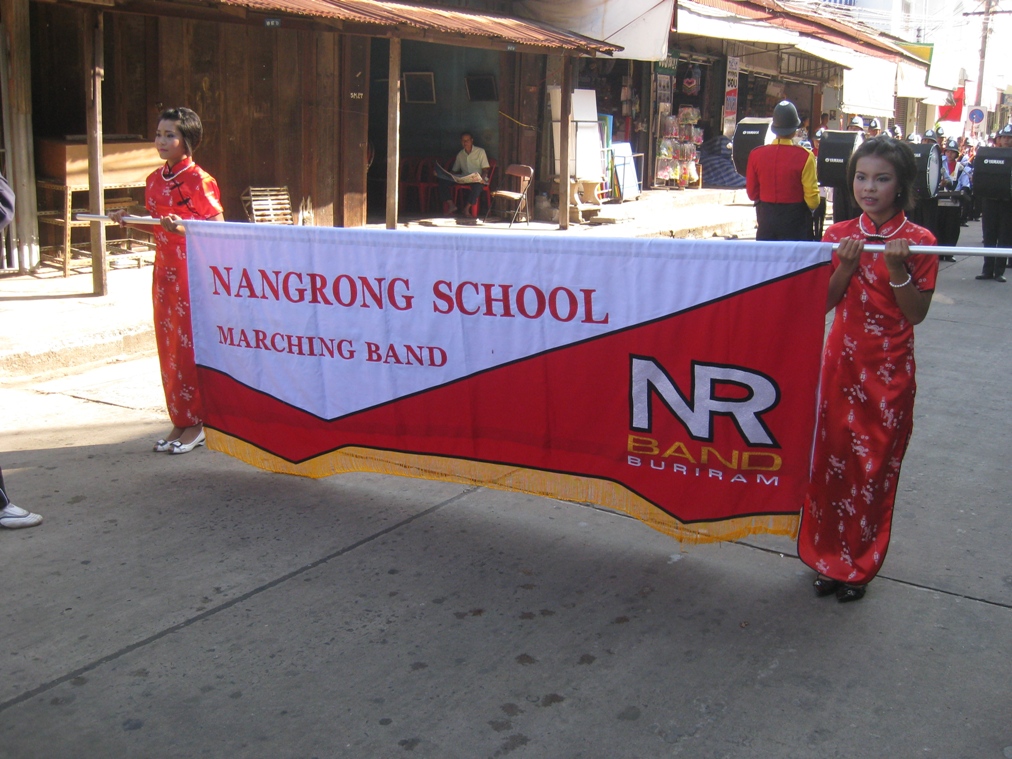
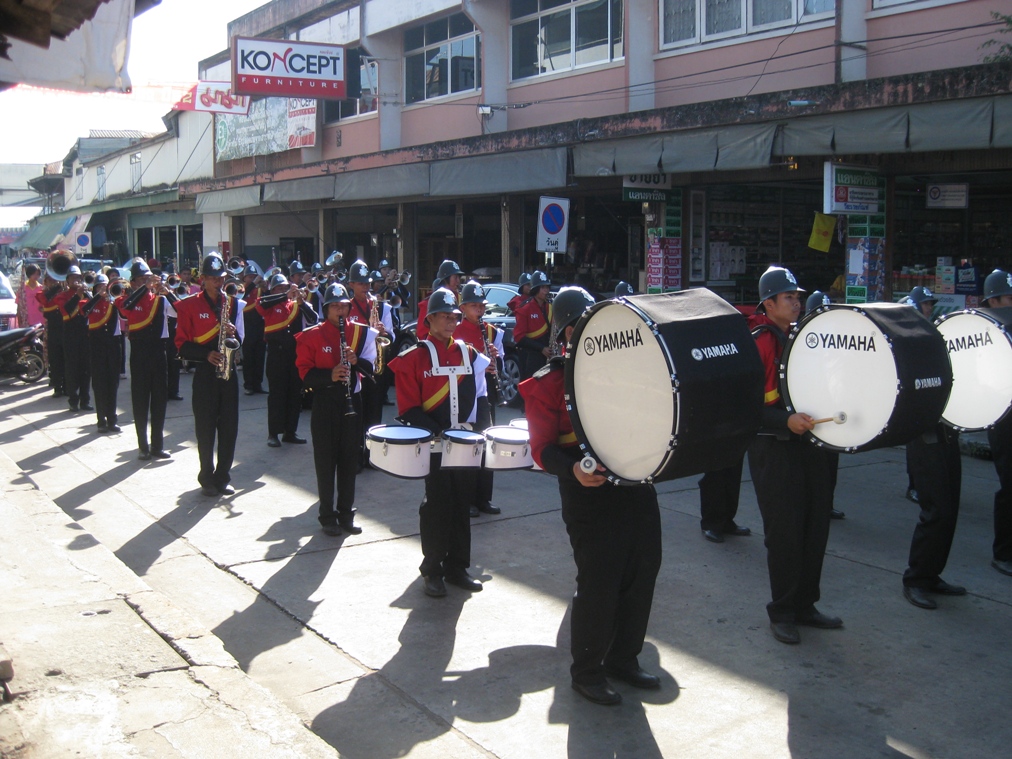
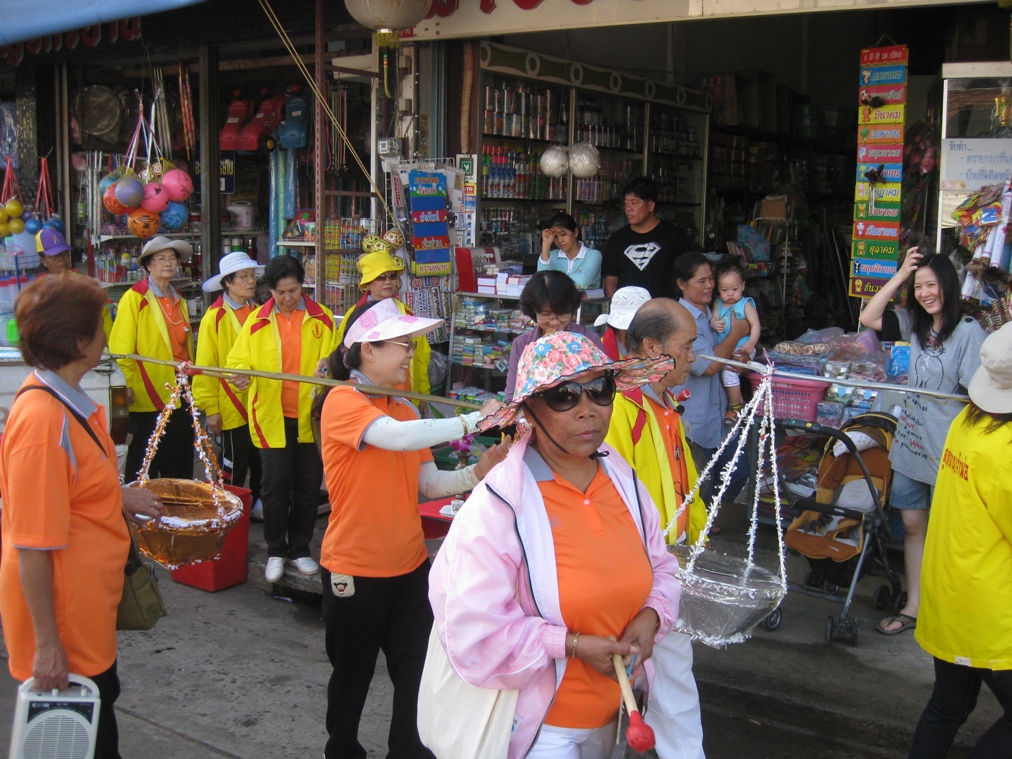
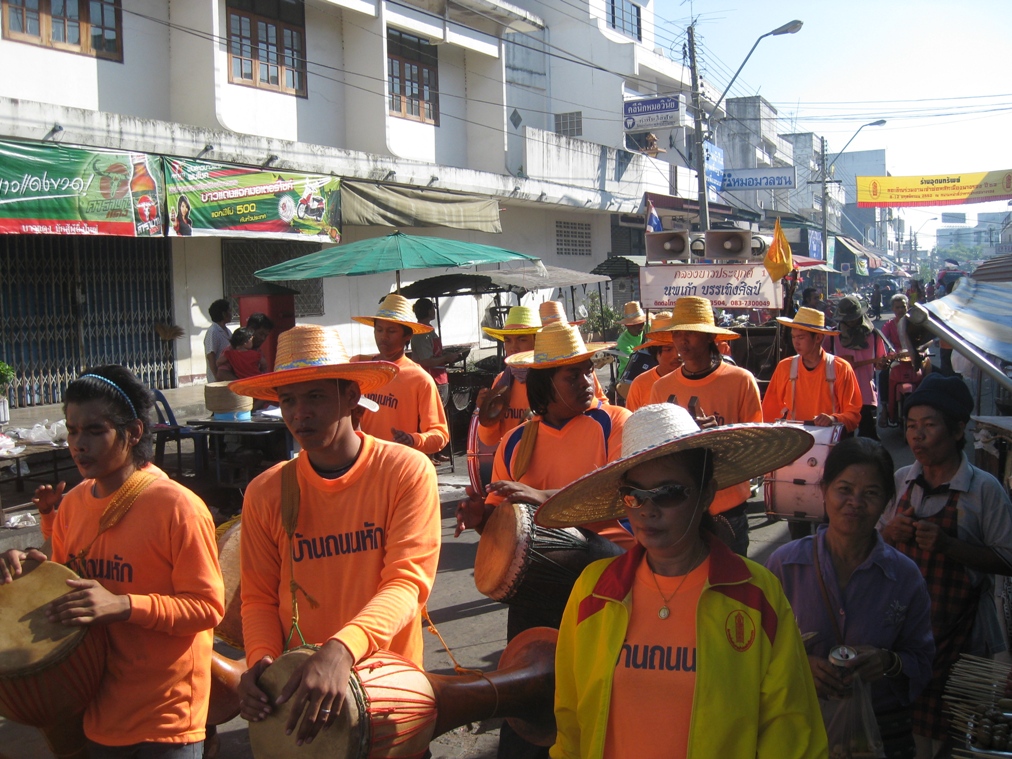
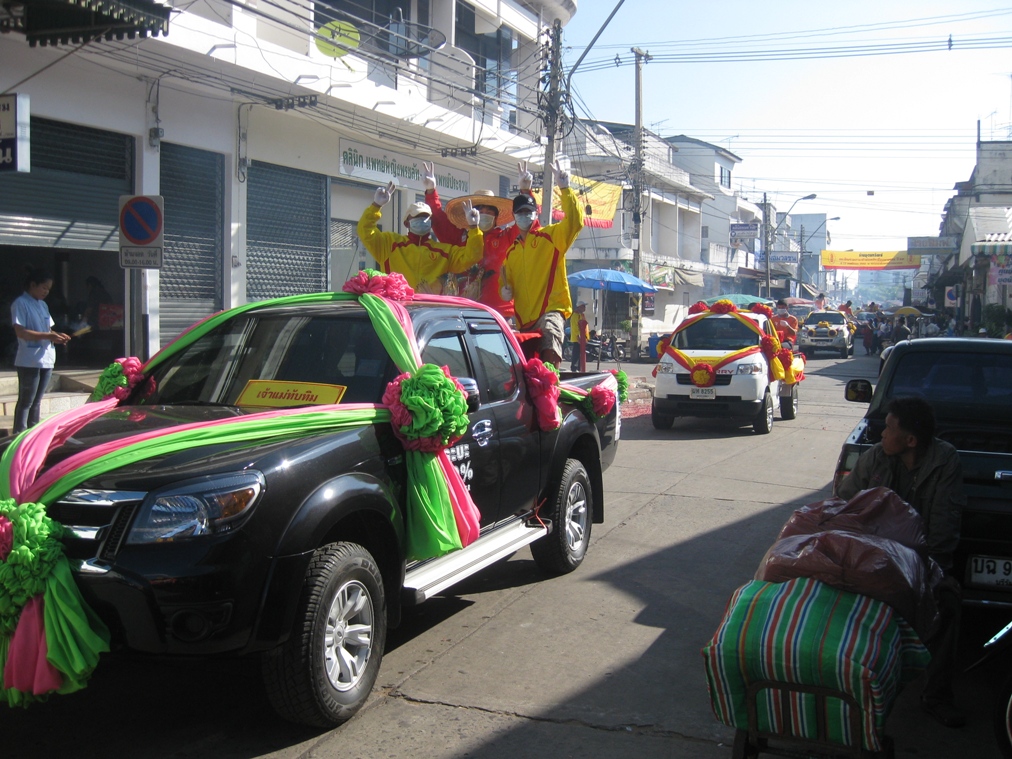
I woke up a bit late yesterday to the sound of a marching band outside. They have a lot of celebrations in Nang Rong. I probably miss most of them since I am not always here. Anyway, I got out quickly and there they were a block away. I’m still not exactly sure what is was all about. The Banners across the street say “Father God of Nang Rong”. Apparently it was Chinese Thai specific celebration connected with the coming Chinese new year that emphasizes honoring of God (I’m not sure which one) and ancestors.
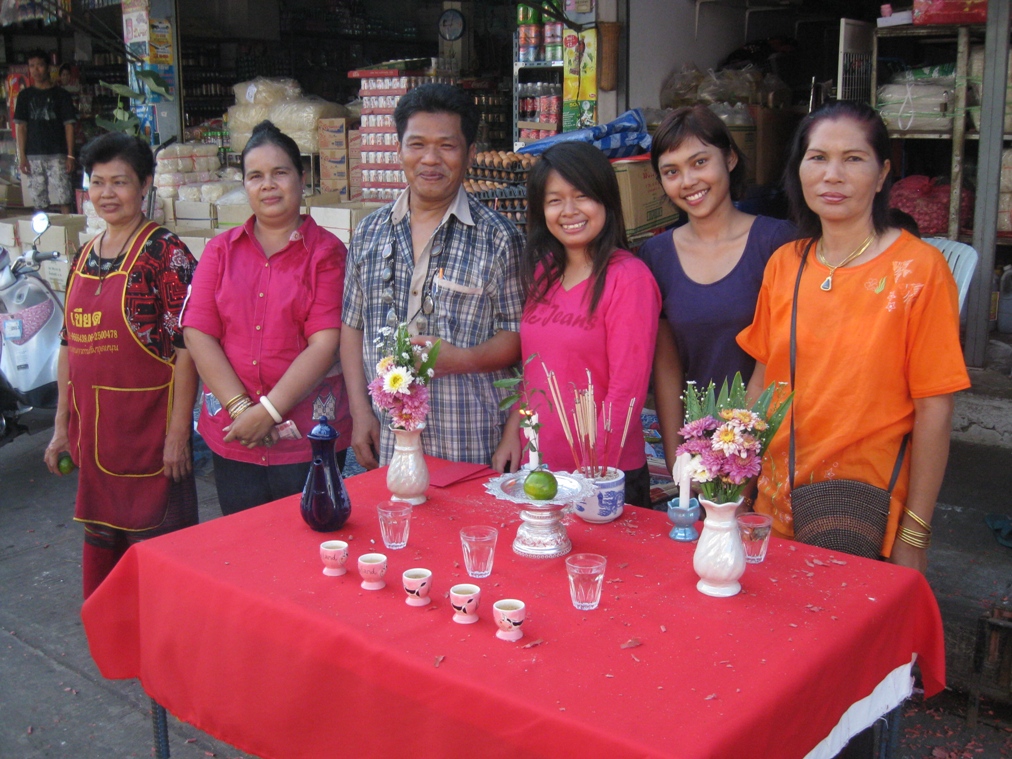
The parade had a short route and the band was standing more than marching. There were also people collecting money at the various shops along the way. This is a Chinese festival, so there were plenty of firecrackers going off in the street. Many shopkeepers had a table out front with offerings. The offerings seemed to follow a pattern with tea foremost, then water, oranges and incense in the back.
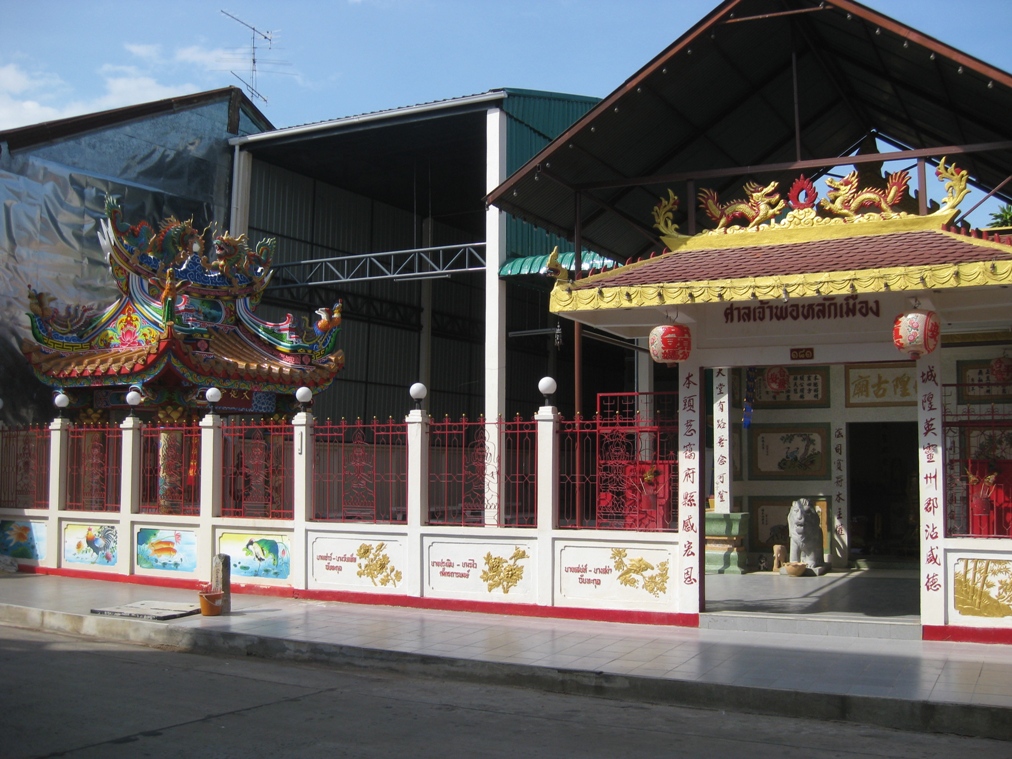
I’m told that this particular celebration is particular to Chinese Thais, not Chinese in general, and varies greatly from town to town in Thailand. I think the Chinese temple around the corner from my house toward the main road (yellow teardrop on our map) is involved with it, but am not sure.
I would like to know more, but few Thais in Nang Rong speak English, and most of those cannot go very deep. Unfortunately, I can’t go very deep with my Thai either, so can only find out the basics about these things. Many of the things I see going on about me will have to retain a certain amount of mystery.
In the previous post I talked about meeting ambassadors, captains of industry, etc. Where else would someone like me, who the local property tax collector will barely give the time of day to in my own country, meet people like that? Myanmar is the only place I can think of.
There really is very little going on in Myanmar in the way of NGO involvement, trade (remember the sanctions) or tourism from the West. John Badgley first told me this, but I since had to look it up from original sources to prove it to someone else. In each of Cambodia, Laos and Vietnam, the total spending, per person, by all outside governments and NGO’s for social welfare of any kind is about fifty dollars per person per year. In Myanmar it is under two and a half dollars.
Not much is happening here, so when something does it is noticed. I suppose for the same reason whatever we can do here, even if small by many measuring sticks, has a large relative impact. Not much is happening in one way, but for us a lot is happening. It’s all relative.
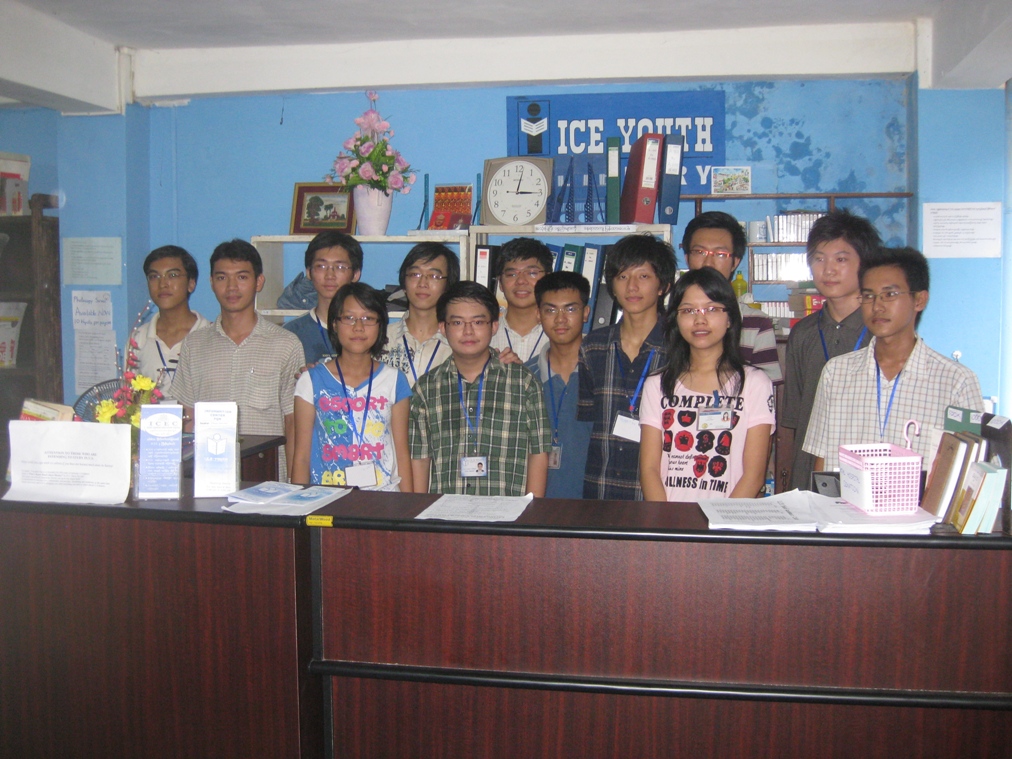
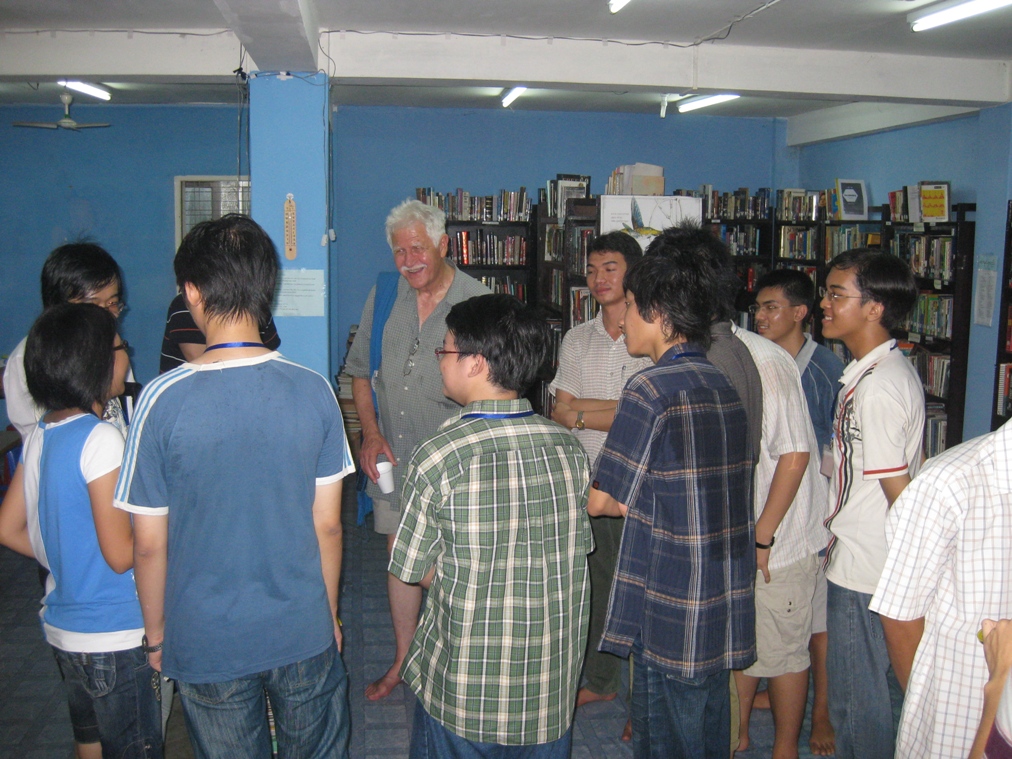
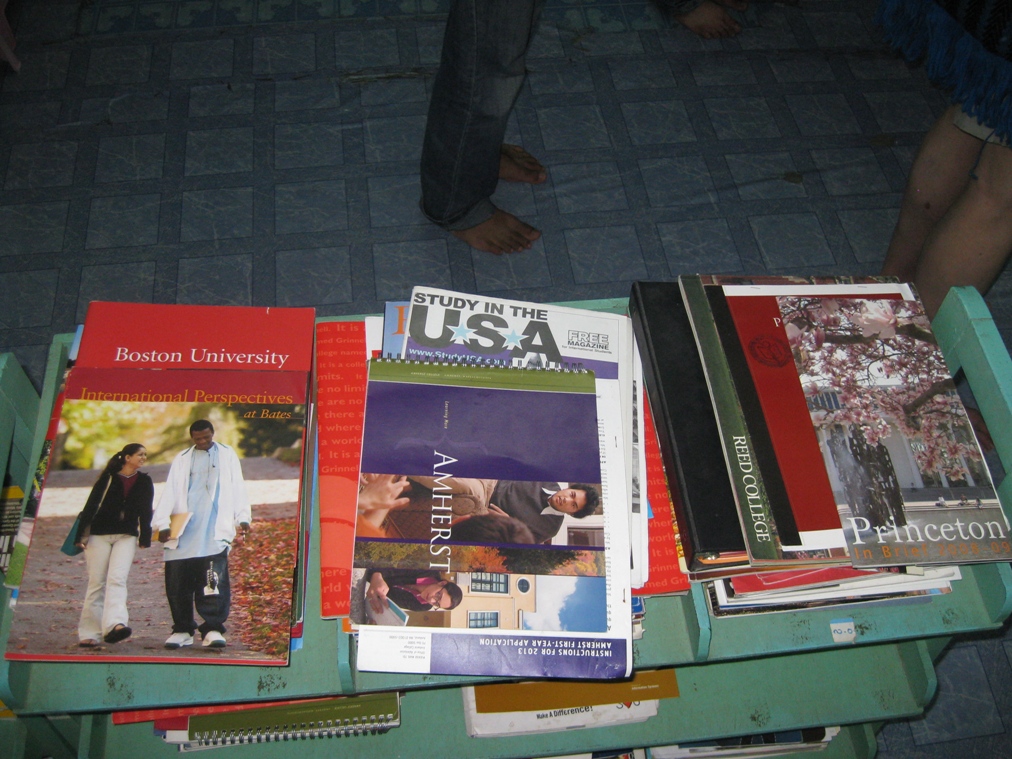
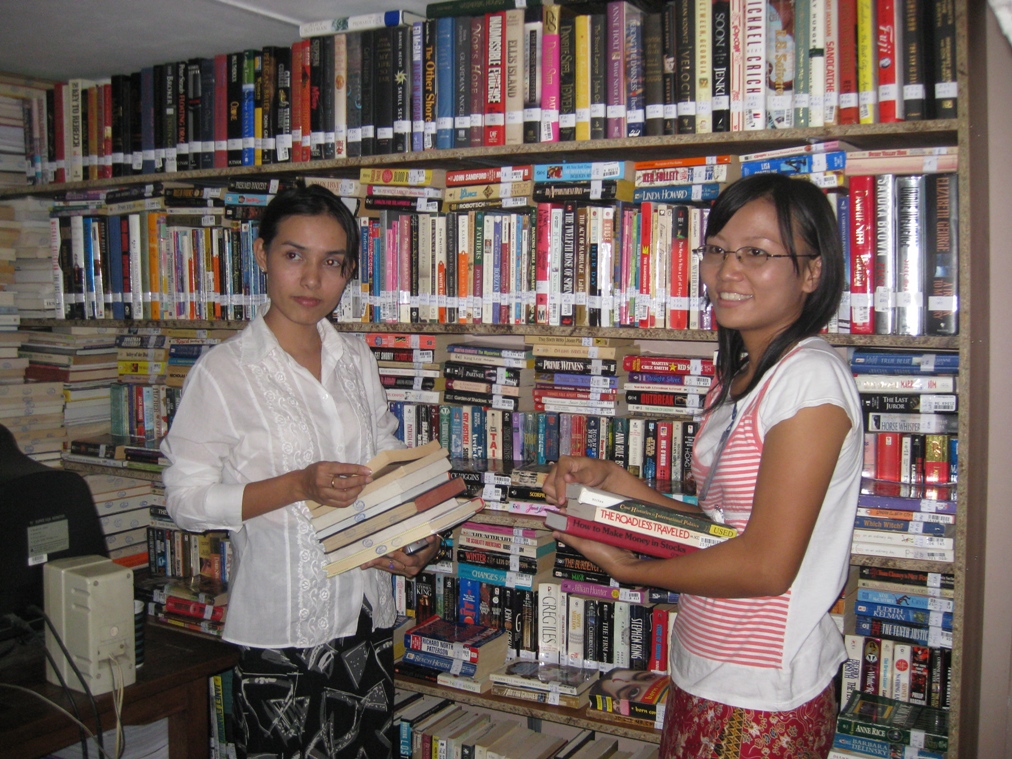
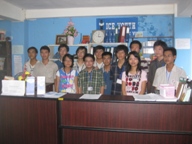
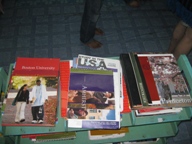
So who else did we meet? One place that receives books and help from us is the ICE-Youth (Information Center for Every Youth) library in Yangon (see video). This has been running since 2002 and is staffed completely by volunteer students. It has both English and Burmese language books. The photo shows the library staff. At any given time normally only three or four of them would be on duty. What kind of students volunteer to run a library? Each year a test similar to our SAT test is given to 300,000 graduating students in Myanmar. Meeting us there were the students who placed first, second and fourth in this test. I took the third photo on the right showing the top top of a small cart near the front desk. It shows what many of these students and others who come into this library are thinking about.
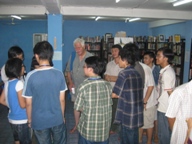
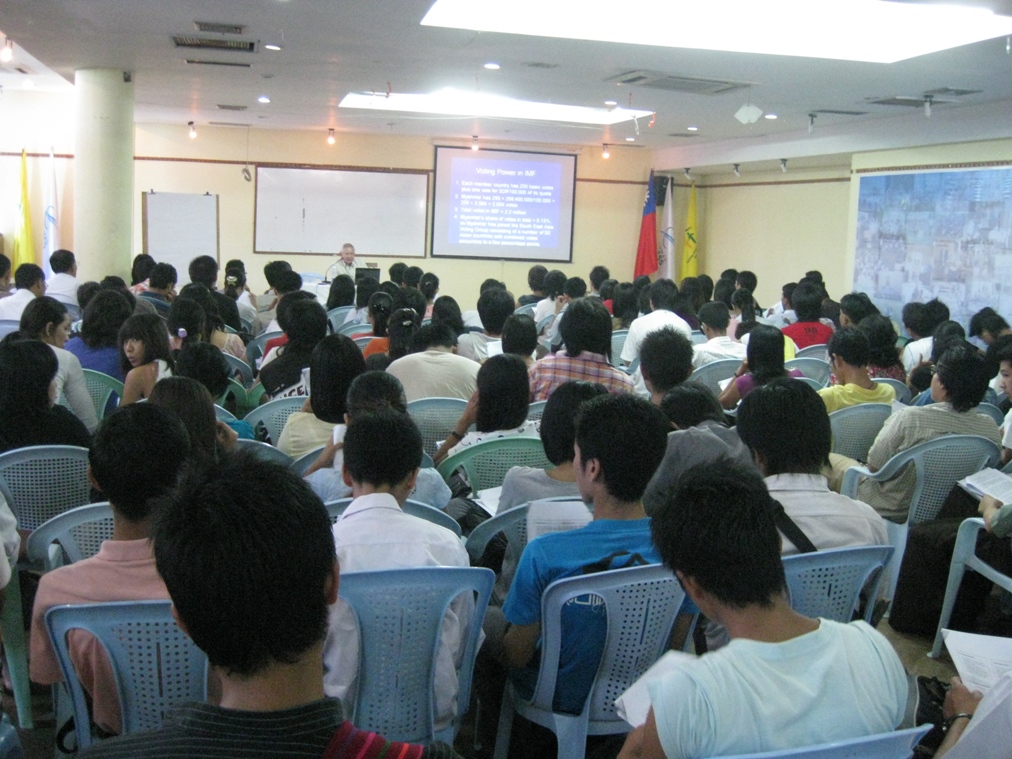
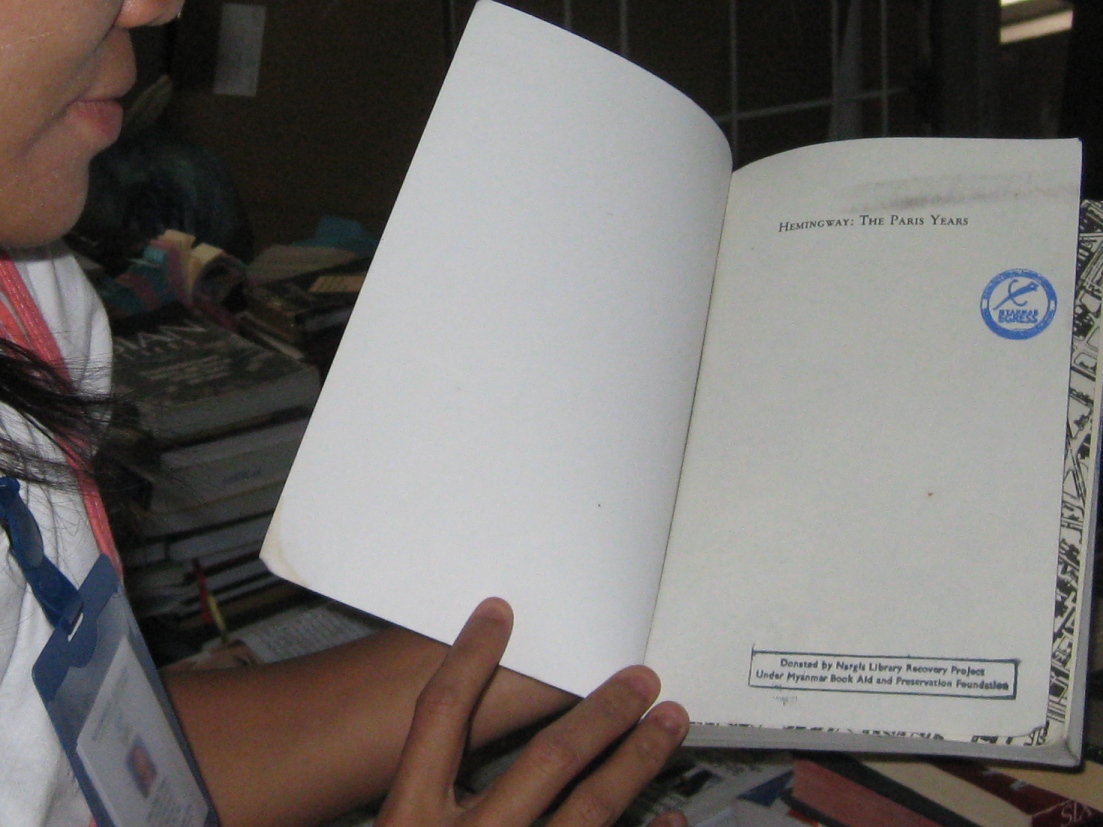
Myanmar Egress is an association which teaches as well as coordinates activities of students and graduates in Yangon. Students in the class pictured are studying international economics. Immediately after cyclone Nargis aid was delayed in getting to the victims. This is the organization that first got aid to the south, and then quickly trained other NGO’s how to operate in the south and cooperate with the Myanmar government. Their English language library is important to them. The librarians pulled a number of books off the shelves, and there on the inside cover was our stamp.
We visited several other no less impressive organizations helping to move Myanmar into the international community. One thing the people in all these organizations agree on is that education and knowledge is the key, with knowledge and education in English being a big part of that, and our books will form a key part of that.
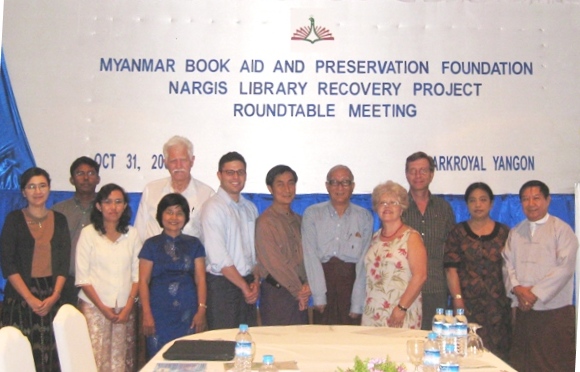
The round table was held on the 31st at the Park Royal hotel in Yangon. In addition to John, Thant, Hector, Sue and myself several other board members from Myanmar came along with a lady named Ju (blue dress) who is currently Myanmar’s most famous author. Thant’s father U Thaw Kaung, to Sue’s right, moderated the meeting. He is on the board or heading up any non governmental foundation or organization involved with libraries on the national level in Myanmar that I am aware of. Dr. May Moe Nwe, part owner of the bookstore along with Thant is at the right. She is also a board member and secretary of Myanmar Book Aid and Preservation Foundation. This meeting summarized accomplishments so far and planned our activities through the end of this year. John describes it more fully here.
I need to qualify what I said at the beginning of the previous post. I actually have met and am now friends with Derek Tonkin the former British ambassador to Vietnam, Thailand and Cambodia over a span of many years. I met him two years ago. What country do you suppose we were in when we met?