In the previous post I talked about meeting ambassadors, captains of industry, etc. Where else would someone like me, who the local property tax collector will barely give the time of day to in my own country, meet people like that? Myanmar is the only place I can think of.
There really is very little going on in Myanmar in the way of NGO involvement, trade (remember the sanctions) or tourism from the West. John Badgley first told me this, but I since had to look it up from original sources to prove it to someone else. In each of Cambodia, Laos and Vietnam, the total spending, per person, by all outside governments and NGO’s for social welfare of any kind is about fifty dollars per person per year. In Myanmar it is under two and a half dollars.
Not much is happening here, so when something does it is noticed. I suppose for the same reason whatever we can do here, even if small by many measuring sticks, has a large relative impact. Not much is happening in one way, but for us a lot is happening. It’s all relative.
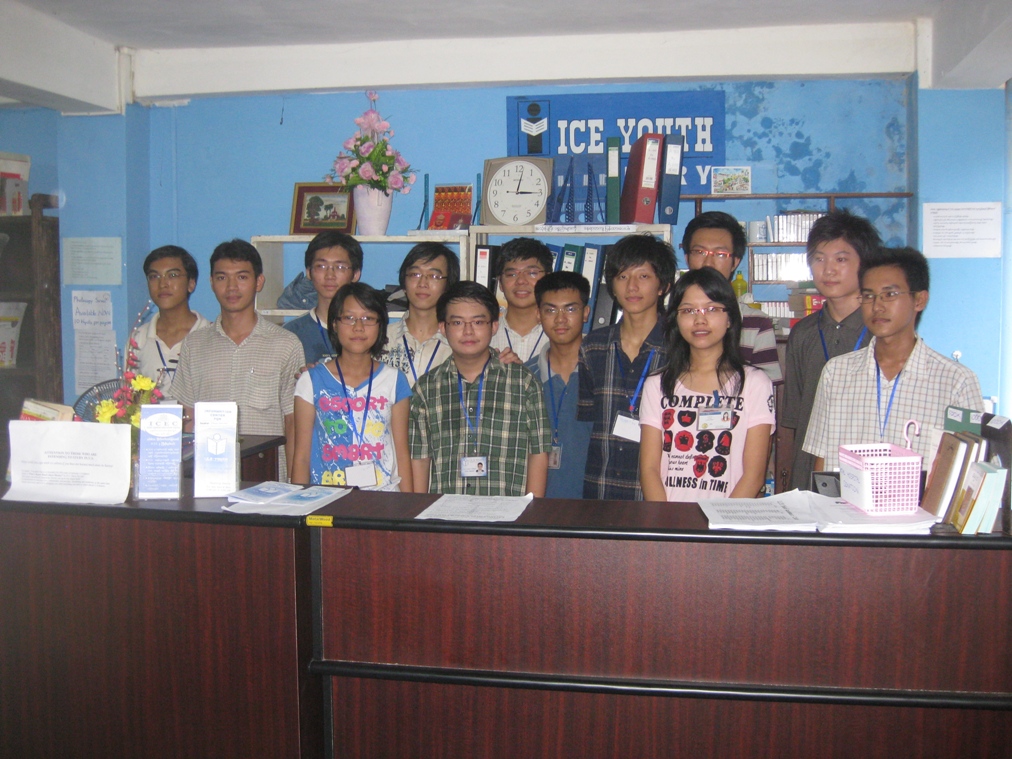
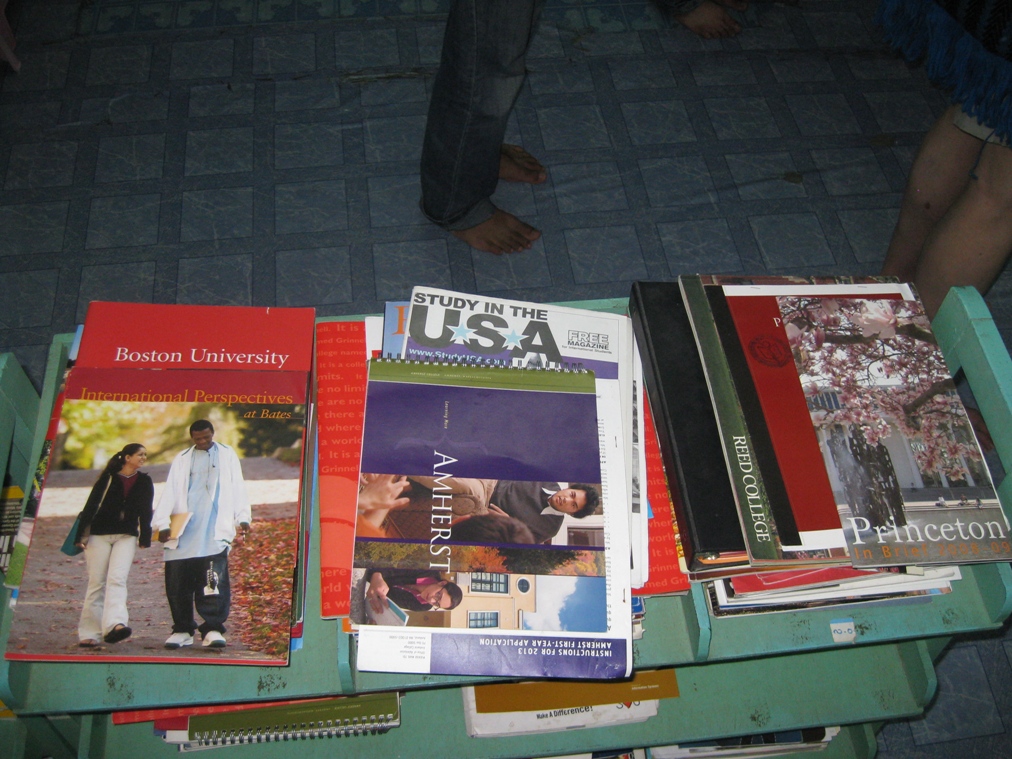
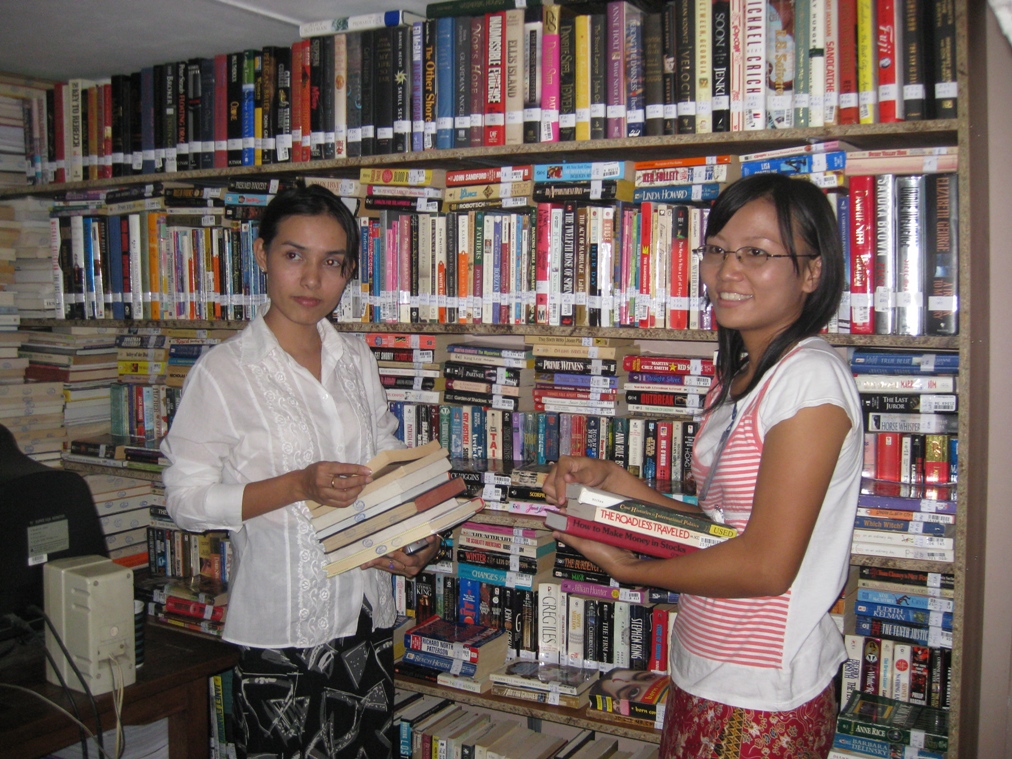
So who else did we meet? One place that receives books and help from us is the ICE-Youth (Information Center for Every Youth) library in Yangon (see video). This has been running since 2002 and is staffed completely by volunteer students. It has both English and Burmese language books. The photo shows the library staff. At any given time normally only three or four of them would be on duty. What kind of students volunteer to run a library? Each year a test similar to our SAT test is given to 300,000 graduating students in Myanmar. Meeting us there were the students who placed first, second and fourth in this test. I took the third photo on the right showing the top top of a small cart near the front desk. It shows what many of these students and others who come into this library are thinking about.
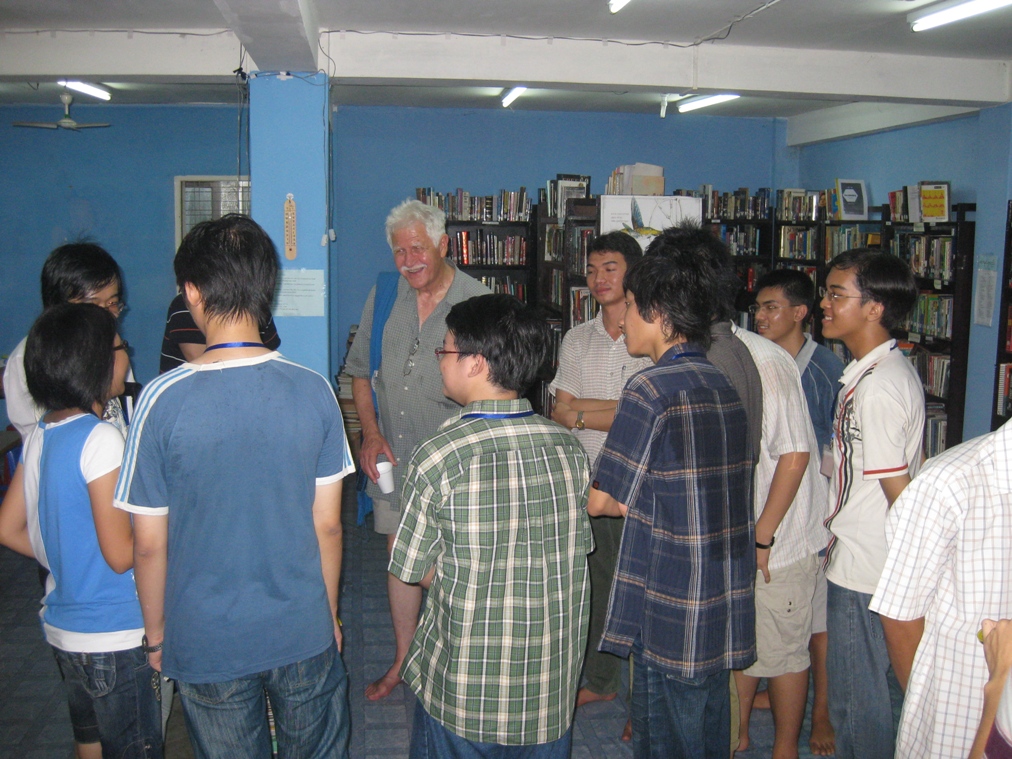
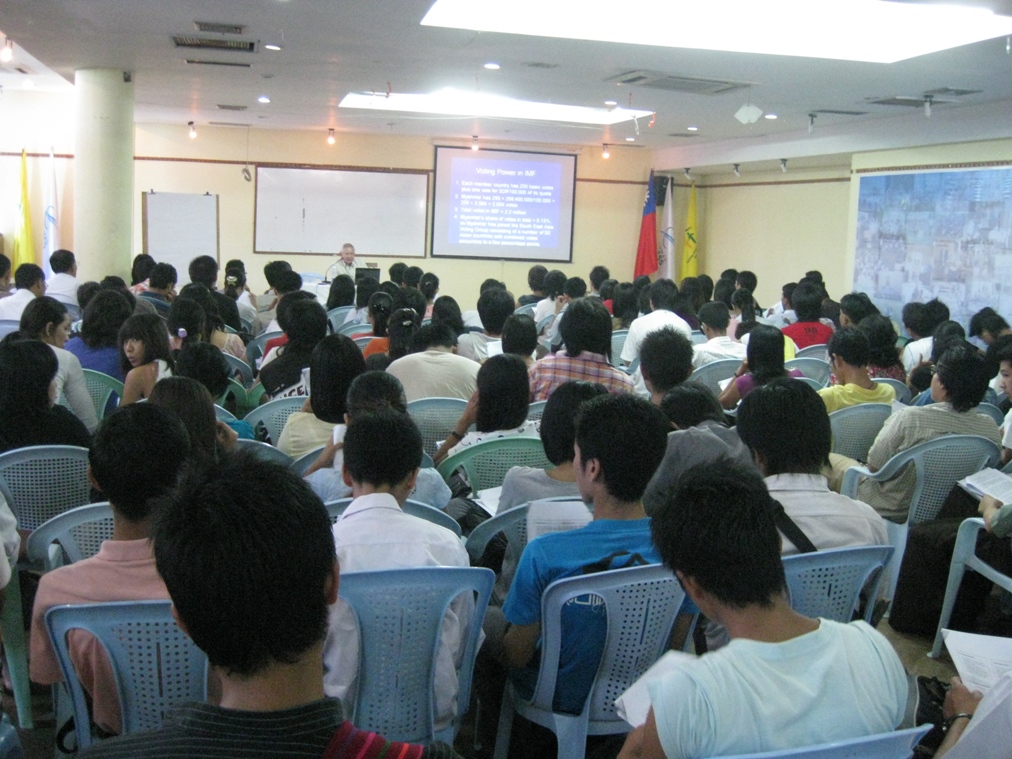
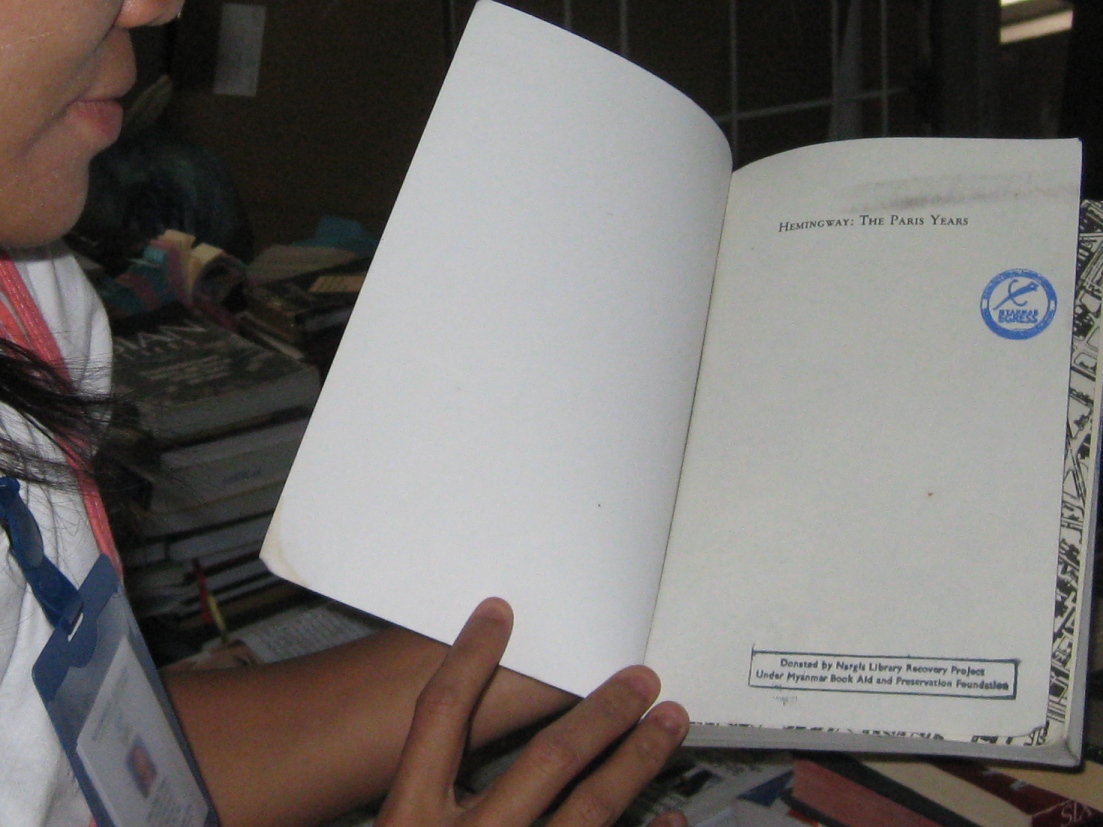
Myanmar Egress is an association which teaches as well as coordinates activities of students and graduates in Yangon. Students in the class pictured are studying international economics. Immediately after cyclone Nargis aid was delayed in getting to the victims. This is the organization that first got aid to the south, and then quickly trained other NGO’s how to operate in the south and cooperate with the Myanmar government. Their English language library is important to them. The librarians pulled a number of books off the shelves, and there on the inside cover was our stamp.
We visited several other no less impressive organizations helping to move Myanmar into the international community. One thing the people in all these organizations agree on is that education and knowledge is the key, with knowledge and education in English being a big part of that, and our books will form a key part of that.
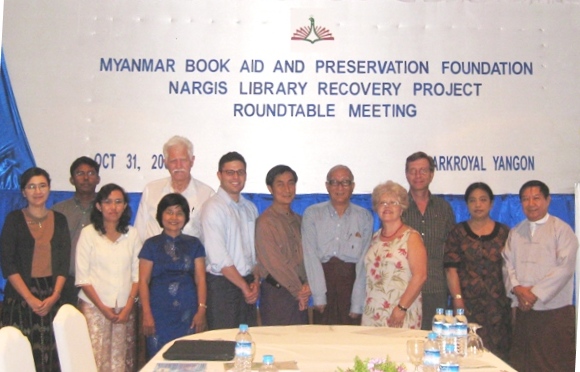
The round table was held on the 31st at the Park Royal hotel in Yangon. In addition to John, Thant, Hector, Sue and myself several other board members from Myanmar came along with a lady named Ju (blue dress) who is currently Myanmar’s most famous author. Thant’s father U Thaw Kaung, to Sue’s right, moderated the meeting. He is on the board or heading up any non governmental foundation or organization involved with libraries on the national level in Myanmar that I am aware of. Dr. May Moe Nwe, part owner of the bookstore along with Thant is at the right. She is also a board member and secretary of Myanmar Book Aid and Preservation Foundation. This meeting summarized accomplishments so far and planned our activities through the end of this year. John describes it more fully here.
I need to qualify what I said at the beginning of the previous post. I actually have met and am now friends with Derek Tonkin the former British ambassador to Vietnam, Thailand and Cambodia over a span of many years. I met him two years ago. What country do you suppose we were in when we met?



